New Delhi: The Defence Acquisition Council (DAC) on
Wednesday approved proposals worth Rs 4,444 crore, including the
purchase of four helicopters for survey vessels at Rs 2,324 crore, but
deferrred a decision on a joint bid of Tata Sons Ltd and Airbus for
replacing IAF’s Avro transport fleet.
|
||

Besides giving its go-ahead to
acquire four choppers, the DAC, under Defence Minister Manohar Parrikar,
also cleared the upgradation of the mobile integrated electronic
warfare system, Samyukta, at a cost of Rs 1,682 crore, a Defence
Ministry spokesperson said.
The DAC also cleared a proposal relating to purchase of P-7 Heavy Drop Platform, which is used for military logistics, for Rs 402 crore, the official said. Another proposal of Rs 36 crore for acquiring propeller engine for offshore patrol vessel of the Coast Guard was also given a go-ahead, the spokesman said. The DAC, however, could not arrive at a decision on a joint bid by Tata Sons Ltd and Airbus to replace the Indian Air Force’s Avro transport fleet, according to sources. European consortium Airbus Defence and Space has made a joint bid with Tata Advanced Systems Ltd (TASL) for 56 medium-transport aircraft of IAF valued at Rs 20,000 crore (USD 3 billion). The euro 14 billion (USD 17.8 billion) Airbus Defence has tied up with Tata Sons’ subsidiary (TASL) as its Indian production partner for the order. The bid is for 56 twin-turboprop tactical military aircraft, including 16 in fly-away condition from the Airbus Defence final assembly line and the remaining 40 to be built and assembled by TASL in Hyderabad. The aircraft is in the six-eight tonne class, with a cruise speed of 800 kms per hour and a range of 2,500-2,800 kms. The IAF had floated the tender after the DAC had on July 19 cleared the proposal for manufacturing the 56 transport aircraft in the private sector, excluding state-run defence firm Hindustan Aeronautics Ltd (HAL), which built the Avro planes.
Source : Defence News
|
Showing posts with label stspl. Show all posts
Showing posts with label stspl. Show all posts
Wednesday, 17 December 2014
Defence acquisition proposals worth Rs 4,444 cr cleared

Thursday, 11 December 2014
Russia to ‘Make in India’ 400 Helicopters a Year
Russia and India have agreed to assemble 400 twin-engined helicopters
a year in India, Russian Deputy Prime Minister Dmitry Rogozin said
after summit talks between President Vladimir Putin and Prime Minister
Narendra Modi.
The Kamov Ka-226T, which Russia offered to assemble in India, is a light multi-role helicopter which is used for search-and-rescue operations.
The issue was discussed during the summit talks between Prime Minister Narendra Modi and Russian President Vladimir Putin.
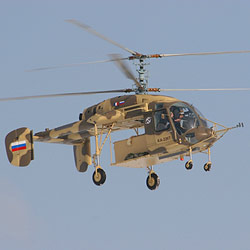 According to Russian Deputy Prime Minister Dmitry Rogozin, almost 400
Kamov helicopters a year will be assembled in India. He said Russia may
consider producing Mi-17 transport helicopter in India as well.
At a joint media interaction with Putin, Modi said they discussed a broad range of new defence projects and how to align the defence relations to India’s own priorities, including ‘Make in India’.
“I am pleased that Russia has offered to fully manufacture in India one of its most advanced helicopters. It includes the possibility of exports from India. It can be used for both military and civilian use. We will follow up on this quickly,” Modi said.
The Prime Minister said Russia has been India’s foremost defence partner through decades and it will remain so.
“Even as India’s options have increased today, Russia will remain our most important defence partner. We have conducted joint exercises across all three wings of the Armed Forces in the last six months,” he said.
Russian officials said an in-principle decision was made on assembling of Russian helicopters in India.
“Almost 400 Kamov helicopters a year will be turned out,” Interfax news agency quoted Rogozin as saying.
Source : Defence News
The Kamov Ka-226T, which Russia offered to assemble in India, is a light multi-role helicopter which is used for search-and-rescue operations.
The issue was discussed during the summit talks between Prime Minister Narendra Modi and Russian President Vladimir Putin.

At a joint media interaction with Putin, Modi said they discussed a broad range of new defence projects and how to align the defence relations to India’s own priorities, including ‘Make in India’.
“I am pleased that Russia has offered to fully manufacture in India one of its most advanced helicopters. It includes the possibility of exports from India. It can be used for both military and civilian use. We will follow up on this quickly,” Modi said.
The Prime Minister said Russia has been India’s foremost defence partner through decades and it will remain so.
“Even as India’s options have increased today, Russia will remain our most important defence partner. We have conducted joint exercises across all three wings of the Armed Forces in the last six months,” he said.
Russian officials said an in-principle decision was made on assembling of Russian helicopters in India.
“Almost 400 Kamov helicopters a year will be turned out,” Interfax news agency quoted Rogozin as saying.
Source : Defence News
Sunday, 7 December 2014
Obama’s defence secy nominee Ashton Carter instrumental in reviving ties with India
Washington: Ashton Carter, nominee for the US Defence Secretary, was
instrumental in reviving India-US defence ties, a top American lawmaker
today said, while others welcomed his nomination for the top Pentagon
post.
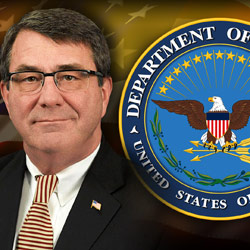 “He (Carter) was instrumental in reviving the US-India defence
relationship, a major development that continues to bear fruit, and he
has helped forge new security ties with former Communist bloc nations,”
House Democratic Whip Steny H Hoyer said after President Barack Obama
nominated Carter.
Hoping that the Senate will confirm Carter quickly so he can get to work without delay, Hoyer said Carter is an excellent choice to serve the next Secretary of Defence.
“He has the experience and the judgment required to lead the Department of Defence as it confronts ISIL in Iraq and Syria, brings our troops safely home from Afghanistan, and counters threats against the United States and our allies around the world,” he said.
Congressman Mac Thornberry, Chairman-elect of the House Armed Services Committee, said Carter knows the Pentagon, and he knows that some reforms are essential if they are to meet the national security needs of the country.
Welcoming the nomination, Senator Jim Inhofe, ranking member of the Senate Armed Services Committee, said he has worked with Carter over the years and consider him qualified for the position and look forward to his confirmation hearing.
Senator John McCain said Carter is a highly competent, experienced, hard-working, and committed public servant.
“Throughout Carter’s previous tenure at the Pentagon, I have worked closely with him on a number of issues, including defence acquisition reform,” he said, adding that he was looking forward to his confirmation hearing.
Senator Lindsey Graham said Carter has the knowledge and capability to serve as Secretary of Defence during these difficult times.
“I expect he will face tough questions at his confirmation hearing about President Obama’s failing national security policy, but I expect he will be confirmed,” the Republican Senator said.
Senator Carl Levin, chairman of the Senate Armed Services Committee, said Carter is highly qualified and experienced, and well-versed in the challenges that the next secretary of defence will face.
“Carter understands the threats that confront our country and I believe his experience at the Pentagon will make him an effective leader for our military. Given the many critical national security issues confronting the United States, it is my hope that the Senate will work swiftly to consider and confirm President Obama’s nominee to this critical post,” Senate Majority Leader Harry Reid said.
Source : Defence News
Sunday, 5 October 2014
Geolocators to find stolen phones
Police To Buy Three Gadgets For Rs. 1.5Cr Each To Identify Precise Locations
The next time you lose a cellphone, chances of reclaiming it are higher.
Delhi Police has finally given the nod to its much-awaited project for buying devices equipped to trace mobile phones. Around 40 mobile phones go missing here every day on average, police data suggests.
The devices, termed Geolocators, will cost Rs 1.5 crore each—the department will reportedly procure three.
One each will go to the special cell and the crime branch, while the third may be allotted to the local police for specific cases.

TOI had first reported in September last year that cops were planning to procure devices which could help them find mobile phones. Sources confirmed that a global tender was floated last week to procure these machines. The gizmo will not only help cops trace loststolen or snatched phones but will also help in narrowing down on the suspects making ransom calls from a remote area. It will also help in tracking terrorists and criminals on the run, police said.
Geolocators, which use advanced GPS and “frequency locator” technology from Europe, come with an assembly unit and a handheld device. The latter is equipped with a smartphone and can be used to reach to the place where the target phone is located. The units can be mounted on a vehicle or packed in a haversack.
A source said the device would generate a “mobileterminating call or an SMS” to the phone from any given number—cops would even be able to speak to the target and engage or distract him—and then it will establish contact with the phone’s IMEI or IMSI’s frequency. A trained cop will go through the area with the handheld device to track down the target. The GPS-enabled unit will take him even to the room where the crimi nals or terrorists could be operating from or hiding and a cover team will follow to thwart them.
Till now, cops have been using the information furnished by the service provider, which directs them to a vague tower location (such as ITO or Pragati Maidan) which have hundreds of active numbers. Cops get to the tower ID and track the target or the phone using manual intelligence. This device—the handheld part of the unit acts as a guide—can take you up to 10 metres close to the target. It will, however, only be able to track GSM phones with 2G or 3G technology and can be upgraded to 4G as well.
Geolocators are an essential part of any police investigation unit in the West and are crucial in cases of homicides, kidnapping for ransom and robbery. The instrument is perceived to be a great help to the force.
Source: Defence News
The next time you lose a cellphone, chances of reclaiming it are higher.
Delhi Police has finally given the nod to its much-awaited project for buying devices equipped to trace mobile phones. Around 40 mobile phones go missing here every day on average, police data suggests.
The devices, termed Geolocators, will cost Rs 1.5 crore each—the department will reportedly procure three.
One each will go to the special cell and the crime branch, while the third may be allotted to the local police for specific cases.
TOI had first reported in September last year that cops were planning to procure devices which could help them find mobile phones. Sources confirmed that a global tender was floated last week to procure these machines. The gizmo will not only help cops trace loststolen or snatched phones but will also help in narrowing down on the suspects making ransom calls from a remote area. It will also help in tracking terrorists and criminals on the run, police said.
Geolocators, which use advanced GPS and “frequency locator” technology from Europe, come with an assembly unit and a handheld device. The latter is equipped with a smartphone and can be used to reach to the place where the target phone is located. The units can be mounted on a vehicle or packed in a haversack.
A source said the device would generate a “mobileterminating call or an SMS” to the phone from any given number—cops would even be able to speak to the target and engage or distract him—and then it will establish contact with the phone’s IMEI or IMSI’s frequency. A trained cop will go through the area with the handheld device to track down the target. The GPS-enabled unit will take him even to the room where the crimi nals or terrorists could be operating from or hiding and a cover team will follow to thwart them.
Till now, cops have been using the information furnished by the service provider, which directs them to a vague tower location (such as ITO or Pragati Maidan) which have hundreds of active numbers. Cops get to the tower ID and track the target or the phone using manual intelligence. This device—the handheld part of the unit acts as a guide—can take you up to 10 metres close to the target. It will, however, only be able to track GSM phones with 2G or 3G technology and can be upgraded to 4G as well.
Geolocators are an essential part of any police investigation unit in the West and are crucial in cases of homicides, kidnapping for ransom and robbery. The instrument is perceived to be a great help to the force.
Source: Defence News
Saturday, 27 September 2014
Air Force Takes off With Plans to Make Aero India Bigger
BANGALORE: The Indian Air Force (IAF) has begun the
preliminary rounds of preparations for the 10th edition of the biennial
air show to be held at the Air Force Station (AFS) Yelahanka, in
Bangalore, from February 18 to 22, 2015.
|
||

With Prime Minister Narendra Modi’s ‘Make in India’ pitch the Aero
India-2015 will be seen through ‘a new window of opportunity’ by the
aerospace and defence industry now. The IAF officials said they are
preparing the ground to accommodate more participants during the air
show.
Speaking to Express on the sidelines of a media visit to AFS Yelahanka on Wednesday, ahead of the 82nd IAF Day celebrations on October 8, Air Commodore S C Gulati, Air Officer Commanding of the station said initial talks with various state government agencies have already begun. “These are early days of preparations and we have the SOPs (standard operating procedures) in place. We hope that the coming show will be bigger in all aspects and AFS Yelahanka is warming up for the task,” said Gulati, a seasoned IAF pilot with close to 8,000 hours of flying. Survey of hospitals and helipads in Bangalore are underway as part of the disaster management plan. To a query whether the training activities at AFS Yelahanka would be hit if HAL Airport is reopened for commercial operations, Gulati said the IAF’s modern traffic management systems were capable of handling the situation. To another query whether the current activities at the Kempegowda International Airport (KIA) have eaten into the traffic space of the base (as reported by the media earlier), he said the training schedules have not been affected. “Our training patterns have not changed and are proceeding as planned. We operate on the assigned air space and both the HAL and KIA too do the same. Paris has got three airports and London has four,” said Gulati, who was part of the Air HQ Communication Squadron, flying the Boeing Business Jets, carrying VIPs. The AFS Yelahanka has the record of being the single largest base in India with maximum number of flying hours. It has to its credit over 20,000 hours of flying, annually. As part of the IAF’s ongoing modernisation mission, AFS Yelahanka will soon get a new station HQ with the construction work almost entering the last lap. An official said the induction of AFS Yelahanka is poised to increase in the near future.
SOurce : Defence News
|
Monday, 1 September 2014
For First Time Since World War 2, Japan Will Sell Military Equipment. To India
TOKYO: During his visit to Japan, Prime Minister Narendra Modi may not have closed a deal on nuclear energy cooperation, but he is returning with a pledge from counterpart Shinzo Abe for nearly 34 billion dollars in investment over the next five years, and the sale of an amphibious aircraft to India's navy. The deal marks the intent of Asia's second and third largest economies to counter an increasingly aggressive China.

The specialised sea-plane, the US-2, will be Japan's first overseas military sale in nearly 50 years. Because it provides landings on sea and land, the plane will significantly enhance the Indian Navy's ability to carry out, casualty evacuations, deliver humanitarian assistance and conduct long-range surveillance and reconnaissance.
In keeping with Mr Modi's emphasis on developing military technology indigenously to check India's dependence on foreign defence manufacturers, the US-2 planes will be made in India. The Indian Navy has been lobbying to get 15 of these.
A statement issued in Tokyo after Monday's summit between Prime Ministers Modi and Abe said "both sides directed the Joint Working Group to accelerate progress in the discussions and preparations for a road map for the development of the Indian aircraft industry through US-2 amphibian aircraft cooperation including the transfer of the aircraft and its technology to India."
This is the first time since World War-II ended seven decades ago that Japan will be selling military hardware abroad. Following its defeat, Japan had imposed an embargo on sale of weapons and military equipment.
The four-engine US-2 aircraft will act as a force multiplier for the Indian Navy, allowing it to quickly insert troops at places where there is no landing strip on shore, including the numerous far-flung islands in Andaman and Nicobar and Lakshwadeep.
Currently, ground troops are delivered to areas like this using a 'Landing Ship Tank' which isn't always effective. The Sea Planes will allow faster troop insertion of small clusters of soldiers for specialised operations.
India's coastline runs nearly 7,500 kilometres and the Navy had earlier projected a requirement of 15 such sea planes, but their acquisition was stalled by a shortage of funds and other competing requirements, seen as more urgent - like acquiring multi-role helicopters, torpedoes, submarines and ships.
The US-2 is one sturdiest aircrafts and can operate in sea state 5 conditions (wind speed of 30 to 38 km per hour) on the high seas as well as on rivers and lakes. Each plane can carry about 30 personnel and lift 18 tonnes and fly 4,500 km at stretch without needing to stop for refuelling.
Story First Published: September 01, 2014 21:30 IST
Source: NDTV
Thursday, 21 August 2014
Indian firms tool up for defence orders on Modi’s ‘buy India’ pledge
(Reuters) – Some of India’s biggest companies are
pouring billions of dollars into manufacturing guns, ships and tanks for
the country’s military, buoyed by the new government’s commitment to
upgrade its armed forces using domestic factories.
|
||

India, the world’s largest arms
importer, will spend $250 billion in the next decade on kit, analysts
estimate, to upgrade its Soviet-era military and narrow the gap with
China, which spends $120 billion a year on defence.
Under the last government, procurement delays and a spate of operational accidents – especially dogging the navy – raised uncomfortable questions over whether India’s armed forces are capable of defending its sea lanes and borders. Even before his landslide election victory in May, Prime Minister Narendra Modi promised to assert India’s military prowess and meet the security challenge posed by a rising China and long-running tensions with Pakistan. Within weeks of becoming prime minister, he boosted defence spending by 12 percent to around $37 billion for the current fiscal year and approved plans to allow more foreign investment into local industry to jump-start production. Launching a new, Indian-built naval destroyer last week, Modi said: “My government has taken important steps in improving indigenous defence technology … We can guarantee peace if our military is modernised.” This build-up comes as Southeast Asian nations expand their own defence industries, spurred by tensions with China. India, reliant on a state defence industry that often delivers late and over budget, risks being caught flat-footed. “The opportunity is huge,” said M.V. Kotwal, president (Heavy Engineering) at Larsen and Toubro Ltd, one of India’s biggest industrial houses. “We really expect quicker implementation. There are signs that this government is very keen to grow indigenisation,” added Kotwal, referring to increasing domestic production. Tata Sons, a $100 billion conglomerate, said last month it will invest $35 billion in the next three years to expand into new areas with a focus on a handful of sectors including defence. Larsen is putting $400 million into a yard to build ships for the navy, while Mumbai-based Mahindra Group is expanding a facility that makes parts for planes, including for the air force, and investing in armoured vehicle and radar production. The companies are being lured by the prospect of lucrative returns on their investments as the Modi government has pledged to make “buy Indian” the default option for future orders. Larsen is targeting a fourfold increase in annual defence revenue to $1 billion within the next five years. Critics of indigenisation argue that producing gear – especially in the lumbering state sector – is more costly than buying from abroad. Such deals can add layers of bureaucracy, increasing risks of corrupt dealings. Indian industry is renowned for its ability to adapt, yet questions remain whether the private sector can come up with the solutions needed to bring armed forces into the 21st century without sufficient access to world-class foreign technology. DELAYS Some companies are also sceptical of the government’s commitment to grow the private market given New Delhi’s history of delays and order cancellations, and the traditionally strong ties between the military and state-run manufacturers. They cite the case of a $10 billion Future Infantry Combat Vehicle (FICV) programme. Conceived in 2009, the defence ministry invited three private players and the Ordnance Factory Board, a state entity, to bid for the 2,600-vehicle contract but suddenly withdrew the letter of intent in 2012. Bidders included Mahindra and Tata, which is developing a vehicle along with Lockheed Martin Corp and General Dynamics Corp that could compete for a future contract, said Rahul Gajare, an analyst at Edelweiss Securities. A quick decision to relaunch the programme would demonstrate Modi’s resolve, said S.P. Shukla, who heads Mahindra’s defence business. Past tenders have stalled amid wrangling over whether or not to allow state manufacturers to bid and under what terms. Larsen’s Kotwal said its Kattupalli shipyard in south India has yet to receive any orders for warships or submarines despite being designed to do just that and despite past government pledges to build at least two submarines in private yards. In the meantime, the yard has switched to constructing and repairing commercial vessels. “The policy in India has been right since 2006. The problem has been implementation,” said Rahul Chaudhry, CEO at Tata Power SED, which makes rocket launchers, sensors and radars. Local firms have captured a fraction of the Indian defence market since it first opened to private participation in 2001. Consecutive governments have handed orders to state factories or to foreign giants like Boeing, Lockheed and BAE Systems. Gajare at Edelweiss estimates total India private sector revenues from defence, including overseas orders, at below $2 billion last year, less than 6 percent of the country’s defence spending.
Source :Defence News
|
Monday, 18 August 2014
Rafale fighter jet deal contract with France almost ready: Defence ministry
The much-awaited multi-billion Rafale combat
aircraft deal with France has moved a step further with the defence
ministry finalizing a ‘draft contract’, according to top defence
ministry officials.
|
||

Rafale was declared the lowest
bidder in Janaury 2012 but the deal has not been inked so far on account
of escalation in the cost. The Cost Negotiation Committee, which was
set up in February 2012 to work out the modalities for the deal has not
reached a conclusion after 30 months of negotiations.
The government raised its concerns over this last month, during the visit of French foreign minister Laurent Fabius to New Delhi. “Yes, we are in the process of finalizing the draft contract for the deal. And we also expect the Cost Negotiation Committee to submit its report soon,” said a senior defence ministry official, who was privy to the developments. But the official refused to give a time frame for inking the deal. “It is very difficult to predict any date for signing the contract. But, it should happen in the next few months,” the officer said, requesting anonymity. The Indian Air Force (IAF), which is coping with a depleted combat strength, claims that even if the deal is signed by the end of the year the first lot of Rafale aircraft would arrive only by 2017, by which time the IAF would have to phase out its MiG-21 squadrons. The likelihood of an early signing is encouraging. Besides, the ruling NDA government has promised to address all the needs of the armed forces to ensure defence preparedness. According to officials privy to the development, the defence ministry has asked representatives of M/s Dassault Aviation – the French manufacturer of Rafale aircraft – to revise the price structure which has gone beyond expected estimates. Officials claim that when the tender was floated in 2007 the cost of the programme was $12 billion (Rs42,000 crore).When the lowest bidder was declared in January 2012, the cost of the deal shot up to $18 billion (Rs90,000 crore). Now with the inclusion of transfer of technology, the life cycle cost and creation of an assembly line, the deal has climbed to a whopping $20 billion. The air force is seeking to replace its aging MiG-21s with a modern fighter and the medium multi-role combat aircraft (MMRCA) fits between India’s high-end Sukhoi-30MKIs and the low-end Tejas LCA lightweight fighter. The IAF has a sanctioned strength of 45 fighter jet squadrons. However, only 30 squadrons are operational as old aircraft have been retired. Eighteen of the 126 new aircraft are to be purchased directly from Dassault and Hindustan Aeronautics Limited will manufacture 108 under a licence, at a new facility in Bangalore. Defence minister Arun Jaitley informed parliament last week that “given the complexity of the procurement case, the process of negotiations with Dassault Aviation on various aspects of the commercial proposal and provisions of draft contract is on.” Dassault Aviation emerged as L-1 bidder for procurement of the MMRCA based on its quotation.
Source : Defence NEws
|
Saturday, 16 August 2014
Indian defence modernisation plan needs pragmatic action
The Army’s war waging capability is increasingly
handicapped. Concerned with dwindling operational preparedness and
operationally hard pressed, it wants to induct advanced technology
hardware that it perceives would serve its operational needs optimally.
|
||

The NDA government has
identified defence reforms and building a self sustaining defence
industrial base as a priority reform sector. To transform this into
reality, it is not so much of the government commitment but its ability
to take policy decisions and put processes in place by spurring public
and private sector investments through higher indigenisation, transfer
of technology, simplifying procedures, etc.
The Army’s war waging capability is increasingly handicapped. Concerned with dwindling operational preparedness and operationally hard pressed, it wants to induct advanced technology hardware that it perceives would serve its operational needs optimally. However its efforts at modernising be it combat or combat support arms are hardly encouraging – plagued by procurement and indigenous production delays and lack of timely planning. The Parliamentary Standing Committee on Defence’s figures reveals that the army’s equipment modernisation is steadily falling. In 2008-09, the army spent 27 paisa of every rupee on capital expenditure. This fell to 24 paisa in 2009-10; 23 paisa in 2010-11; 20 paisa in 2012-13 and just 18 paisa in the last two years. Indian army’s mechanised fleet comprises T-72 and T72 M1s Main Battle Tanks (MBTs), T-90S MBTs and indigenously produced Arjun MKI tanks. The main issue facing operational efficiency of mechanised forces are two: night fighting capability and ammunition. Resultantly the army’s ambitious plans to transform from a ‘threat-based to a capability force’ by 2020 are being consistently thwarted as a result of process driven MoD breaucracy and the Army headquarters delays in drawing up credible qualitative requirements. Army’s Modernization Perspective :: Let us take the armour first. Indian army’s mechanised fleet comprises T-72 and T72 M1s Main Battle Tanks (MBTs), T-90S MBTs and indigenously produced Arjun MKI tanks. The main issue facing operational efficiency of mechanised forces are two: night fighting capability and ammunition. In so far as night fighting capability is concerned only the 650-odd Russian T90S MBTs along with indigenously designed Arjun MKI tanks have full solution night fighting capability. T-72 and T72M1s that form the backbone of 59-odd armour regiments along with some 2200 Soviet-designed BMP-II infantry combat vehicles (ICVs) lack night fighting capability. Majority of the T72s await upgrades that will provide them with either full solution thermal imaging fire control systems (TIFCS) or third generation partial solution thermal imaging stand alone systems (TISAS) enabling all weather including night operations. Till date only 620 partial solution TISAS have been acquired. In terms of armour ammunition there is critical deficiency of anti tank ammunition; 125 mm armour piercing fin-stabilised discarding sabot (APFSDS). Indigenous production is held up on account of black listing of Israeli company, resultantly availability of 125 mm APFSDS including war wastage reserves have dropped to critical levels necessitating urgent imports of around 66,000 rounds from Russia at highly inflated prices. Next major deficiency is that of Artillery, where no new gun has been inducted in last three decades. Despite years of attempts at modernisation; army’s artillery profile remains beseeched by the inability to decide on the 155 mm gun to replace the 180-odd field artillery regiments employing as many as six different calibres that are fast approaching obsolescence. Even the 32 artillery regiments equipped with 410 FH-77B 155 mm Bofors guns imported in the late 1980s-are reduced to half following cannibalization owing to the non-availability of spares. Upgradation of approximately 200 Soviet 130 mm M-46 carried out jointly by the Ordnance Factory Board and Soltam of Israel has been unsatisfactory resulting in CBI enquiry. The proposal under the Artillery Rationalisation Plan to acquire by 2020-25 a mix of around 3000-3600; 155mm/39 calibre light weight and 155mm/52 calibre towed, mounted, self-propelled (tracked and wheeled) and ultra light weight 155mm/39 calibre howitzers through imports and local, licensed manufacture have been continually postponed for over a decade. Tenders for almost all these guns have been issued, withdrawn and re-issued, along with several rounds of inconclusive trials. Matters have been further complicated by the MoD completely or partially blacklisting at least four top overseas howitzer manufacturers. The infantry’s F-INSAS (Future Infantry Soldier as a System) project that includes a fully networked, all-terrain, all-weather personal equipment platform as well as enhanced firepower and mobility for the digitalised battlefield of the future continues to be abnormally behind schedule. Similarly eight-odd Special Forces battalions face an identity crisis, operating without a specialised operational mandate, organisational support or “dedicated budget” resulting in piecemeal and incomplete weapon and equipment packages. Adding to the Infantry’s woes is the shortages of credible assault rifles (ARs), carbines, ballistic helmets, lightweight bullet proof jackets and night vision devices. These are largely produced indigenously. Last year the MoD issued a global tender for 66,000, 5.56 mm ARs for an estimated $ 700 million to replace the locally designed Indian Small Arms System (INSAS). The eventual requirement for the proposed AR is expected to be around 2 million units for use not only by the army but also the paramilitary forces and the numerous provincial police forces in a project estimated to cost around $3 billion. Other infantry shortages include; close quarter battle carbines, general purpose machine guns, light-weight anti-materiel rifles, mine protected vehicles, snow scooters for use at heights above 21,000 feet in Siachen, 390,000 ballistic helmets, over 30,000 third generation NVDs, 180,000 lightweight bullet proof jackets together with other assorted ordnance including new generation grenades. Similar is the story of air defence. The bulk of the army’s air defence guns – Bofors L 70s and the Soviet Zu-23-2s and ZUS-23-4s and missiles like the Russian OSA-AK and Kradvat – date back 30-40 years and need replacing. The Army Aviation also faces similar shortages. There is an urgent need to replace obsolete aviation assets like the Chetak and Cheetah helicopters. Acquisition of 197 helicopters under the Army Aviation Corps Vision 2017 was postponed after the procurement of Eurocopter AS 550 C3 Fennec was scrapped in November 2007. Four years later after trials, evaluation and negotiation the contract is under re-assessment featuring Russia’s Kamov 226 and Eurocopter’s AS 550 models, with little chance of early conclusion. Addressing Army’s Modernization Needs :: The major issue that emerges is how will the army get out of the vicious cycle of delays in procurement, and get its modernisation plans back on track. Is it feasible to undertake an all encompassing procurement backed by indigenous production taking the transfer of technology (TOT) route? What are the likely constraints? Let us take a look at the budgetary support first? The Defence Budget for 2014-15 has an allocation of Rs. 2, 29,000 crores ($38 billion) an increase of 12 per cent over the previous year’s allocation. The capital outlay is Rs.94, 588 crores ($15.7 billion), and the remaining allocation of Rs. 1, 34,412 crores is the revenue outlay. The sub allocation of capital outlay to Army is Rs. 20, 655 crores, Navy Rs. 22, 312 crores, Air force Rs. 31,818 crores, DRDO Rs.9298 crores and modernization of Ordnance Factories (OFs) Rs. 1, 207 crores. While the figures might look impressive it needs to be noted that fairly large amount of capital outlays get consumed by committed liabilities leaving fairly modest amounts for new procurements. Second, even if the money was available how can the army make up such huge shortages in any acceptable time frame? Procurement procedures, deciding on vendors for transfer of technology, issues regarding off sets, participation of the private sector and above all skill development are long drawn process which in the best case can take anything from 5 to 7 years. To deal with the problem two critical aspects need to be addressed: One, the nature of future threats both in short-and-medium-to-long-terms basis. If the trigger for conflicts is likely to be unacceptable provocation requiring immediate military response; this requires basic level of preparedness and modernization to deal with such contingencies. Two, the long-term capability needs require a more nuanced and detailed induction perspective more attuned to R&D, technology transfers and indigenous production, etc. The essential take away from the above analysis is two-fold – laying down induction priorities and tri service synergy. [Author Brigadier (Retd.) Arun Sahgal, PhD, is Deputy Director Research and Head, Centre for Strategic Studies and Simulation, at the United Service Institution of India. He is a member of National Task Force on Net Assessment and Simulation, under the NSCS, Government of India.]
Source : Defence News
|
Thursday, 7 August 2014
US eyes big-ticket arms deals during Hagel’s visit
With US Defense Secretary Chuck Hagel set to visit India tomorrow, noted American experts said his maiden trip to the country, in the early days of the new government, will give a much-needed thrust to the Indo-US defense ties.
| ||

Hagel, the second US cabinet minister to meet Prime Minister Narendra Modi, this week, will be accompanied by a high-power delegation of military leadership.
The Defense Secretary, during his three-day visit will hold talks with Defence Minister Arun Jaitley, and is also expected to meet National Security Advisor Ajit K Doval and External Affairs Minister Sushma Swaraj.“The purpose of this trip is to nurture the relationship and not to ink any deal,” Pentagon Press Secretary, Rear Admiral John Kirby told PTI ahead of the trip. Hagel’s meetings will focus on the converging interests of India and the US in the Asia Pacific, their common interests in Afghanistan and initiatives to strengthen bilateral defense cooperation, including military exercises, defense, trade, co-production and co-development, and research and new technologies, Kirby said. Assistant Secretary of State for Political Military Affairs, Puneet Talwar will also accompany Hagel. “Bilateral defence ties are stronger than they have ever been, and poised to deepen further,” said Alyssa Ayres, senior fellow for India, Pakistan, and South Asia at the Council on Foreign Relation. “On matters of strategy, a high-fidelity conversation between Hagel and Jaitley about regional security will build confidence between the two new counterparts,” Ayres said. According to Richard M Rossow, Wadhwani Chair in US India Policy Studies, at the Center for Strategic and International Studies, India US defense ties have been the ballast for the relationship in the last year. “Losing the MMRCA bid was painful, but the Department of Defense rebounded quickly, launching the Defense Trade Technology Initiative (DTTI). Defense sales by American firms are increasing, and joint exercises – highlighted by the recent Exercise Malabar,” he said. “Anything really big that is close to ready for announcement would typically be held for when the two heads of state meet in September,” Rossow said.
Source: Defencenews
|
Indian Union cabinet approves FDI in defence, railways
The Union Cabinet on Wednesday approved a proposal to raise the cap
on Foreign Direct Investment (FDI) in the defence sector from 26% to
49%, a move aimed at accelerating indigenisation and bringing in modern
technologies to meet the requirements of the armed forces.
Finance minister Arun Jaitley had announced in his budget speech that the FDI cap in defence manufacturing would be increased to 49%, with full Indian management and control through the Foreign Investment Promotion Board (FIPB) route.
Foreign firms haven’t made significant investments or set up defence manufacturing facilities, with the 26% cap on FDI dampening their enthusiasm to pump money into the country.
Barely $5 million of FDI has flowed into India since the defence
sector was thrown open to private companies in 2001 by then NDA
government.
However, it remains to be seen if lifting the FDI cap to 49% would lead to a significant inflow of foreign investment into the country and lead to greater indigenisation as there are some who have been advocating raising the limit to 74%.
Former defence minister AK Antony had opposed lifting the 26% cap on FDI. He had attacked the NDA government last month for increasing the FDI cap to 49% in the Budget, saying that it would hurt national security.
He had said, “I know a very strong lobby is working. Their demand is 100% FDI in defence. Successive governments since 1991 have overcome such pressure tactics. Their decision not to grant FDI beyond 26% was well thought out.”
However, the commerce ministry under the UPA regime had batted for raising the FDI cap to 74% to encourage foreign firms to invest in India.
100% FDI in railways
The government also approved a proposal to allow 100% foreign direct investment (FDI) for building railways infrastructure. Foreign capital in railways was not allowed till now.
However, the new government led by Prime Minister Narendra Modi has been pushing for it to build infrastructure projects such as high-speed railways and railway lines to and from coal mines and ports.
Currently, the cash-strapped railways cannot fund these projects without private participation. Foreign players from Japan and China are said to be keen to participate in building up of the infrastructure.
(With IANS inputs)
Source : Hindustantimes
Finance minister Arun Jaitley had announced in his budget speech that the FDI cap in defence manufacturing would be increased to 49%, with full Indian management and control through the Foreign Investment Promotion Board (FIPB) route.
Foreign firms haven’t made significant investments or set up defence manufacturing facilities, with the 26% cap on FDI dampening their enthusiasm to pump money into the country.
However, it remains to be seen if lifting the FDI cap to 49% would lead to a significant inflow of foreign investment into the country and lead to greater indigenisation as there are some who have been advocating raising the limit to 74%.
Former defence minister AK Antony had opposed lifting the 26% cap on FDI. He had attacked the NDA government last month for increasing the FDI cap to 49% in the Budget, saying that it would hurt national security.
He had said, “I know a very strong lobby is working. Their demand is 100% FDI in defence. Successive governments since 1991 have overcome such pressure tactics. Their decision not to grant FDI beyond 26% was well thought out.”
However, the commerce ministry under the UPA regime had batted for raising the FDI cap to 74% to encourage foreign firms to invest in India.
100% FDI in railways
The government also approved a proposal to allow 100% foreign direct investment (FDI) for building railways infrastructure. Foreign capital in railways was not allowed till now.
However, the new government led by Prime Minister Narendra Modi has been pushing for it to build infrastructure projects such as high-speed railways and railway lines to and from coal mines and ports.
Currently, the cash-strapped railways cannot fund these projects without private participation. Foreign players from Japan and China are said to be keen to participate in building up of the infrastructure.
(With IANS inputs)
Source : Hindustantimes
Wednesday, 30 July 2014
Indian Defense is in the air again
Defense is in the air again. There is a palpable sign of excitement
amongst the Industry players who are suddenly awake to new sense of
anticipation as far as defence sector is concerned. After a lull of
almost a decade where inaction at large and negative action to some
extent was the norm, the industry is looking forward to slew of measures
from the new government to kick start the sector out of its deep
slumber. And so far government has made right kind of noises. In fact,
the new BJP led government’s manifesto explicitly envisages India as an
exporter of defense equipments over the next decade. Government has
already stuck a right note by increasing FDI in defence to 49% and also
enhanced capital expenditure budget by 20%. Well, what it means for
domestic defence players? Let’s take a deep breath and soak in the
following facts:
a) According to a recent report by a reputed financial house, given Mr. Narendra Modi’s push to reduce import dependence in defence equipments and also to make India self-reliant, India’s likely defence outlay is estimated at USD 248 billion over next decade.
b) According to another report by KPMG, the defence budget is likely to grow at CAGR of 8% to reach $64 billion by 2020. The growth is to be primarily driven by capital expenditure.
The above figures suggest a huge opportunity for not only foreign players but more significantly even for domestic players, given the present government intent to promote the domestic defense industry as also to reduce dependence on imports.
Now, are these mere numbers or are we staring at a tremendous business opportunity?
The anecdotal data as well as common sense approach suggest, the later.
a) NDA has always been known to promote private business enterprise and the current PM is known for his “Gujarat Model” that has a strong place for private enterprise.
b) BJP intends to have a clear focus on Indian Defence with a vision to make it self- reliant & import independent.
c) Govt also clearly intends to promote domestic defence manufacturing that serve three purposes:
 No
doubt that Indian top business houses like TATA, RIL, Mahindra, L&T
are aggressively eyeing defense as a sunrise sector for coming decade.
It is noteworthy that currently Indian Domestic defence manufacturing is
distinctly dominated by Public Sector (DPSU) & Govt (OFB) which
together account for 90% of defence manufacturing. Here, it is also
noteworthy that opening up of largely govt dominated sectors in the past
has meant huge business opportunities for private sector, teleocm,
media and Aviation being the cases in point.
The above argument clearly suggests a huge door (not window) of opportunities for private enterprises in this now rightly called “Sunrise Sector”.
a) According to a recent report by a reputed financial house, given Mr. Narendra Modi’s push to reduce import dependence in defence equipments and also to make India self-reliant, India’s likely defence outlay is estimated at USD 248 billion over next decade.
b) According to another report by KPMG, the defence budget is likely to grow at CAGR of 8% to reach $64 billion by 2020. The growth is to be primarily driven by capital expenditure.
The above figures suggest a huge opportunity for not only foreign players but more significantly even for domestic players, given the present government intent to promote the domestic defense industry as also to reduce dependence on imports.
Now, are these mere numbers or are we staring at a tremendous business opportunity?
The anecdotal data as well as common sense approach suggest, the later.
a) NDA has always been known to promote private business enterprise and the current PM is known for his “Gujarat Model” that has a strong place for private enterprise.
b) BJP intends to have a clear focus on Indian Defence with a vision to make it self- reliant & import independent.
c) Govt also clearly intends to promote domestic defence manufacturing that serve three purposes:
- It revs up the Indian Manufacturing sector and help aid our economy
- Create much needed employment for youth and
- Takes a significant step towards its ultimate goal of being self-reliant in defence.
No
doubt that Indian top business houses like TATA, RIL, Mahindra, L&T
are aggressively eyeing defense as a sunrise sector for coming decade.
It is noteworthy that currently Indian Domestic defence manufacturing is
distinctly dominated by Public Sector (DPSU) & Govt (OFB) which
together account for 90% of defence manufacturing. Here, it is also
noteworthy that opening up of largely govt dominated sectors in the past
has meant huge business opportunities for private sector, teleocm,
media and Aviation being the cases in point.The above argument clearly suggests a huge door (not window) of opportunities for private enterprises in this now rightly called “Sunrise Sector”.
Sunday, 27 July 2014
'India should be more aware of cyber security threats'
NEW
DELHI: India should be more aware of cyber security threats and the
time to act in this regard is now, an Israeli security solutions firm
has said even as it averred that the two countries have many common
"opponents".
"I believe India should be more aware of cyber threats. I am sure that once India will be aware of cyber threats, the necessary steps would be taken," Zori Kor, vice president of Israeli firm ASERO Worldwide, said here.
Stressing on the importance of having cyber security, Kor said it was "unfortunate" that the Indian public is not fully aware of threats in this field, which can even have a ripple effect on the economy.
"As the public still doesn't understand how complex the challenge is, may be some decision makers are hesitating whether to take the necessary steps in order to meet the future challenges," said Kor, who is on a visit to India in connection with an upcoming homeland security conference in Israel.
"My recommendation is to start dealing with it (cyber security needs) now because it takes time," said Kor, who recently retired from Israeli Security Agency after 25 years of service in a number of counter-terrorism and protective security posts.
Adding that cyber security is not an area where one size fits all as the environment and threats keep changing from time to time, he said, "If we answer only the current situation, it might not be good enough. We have to think what the bad guy's next step would be in order to answer that."
Talking about the salient features of Israeli security capabilities, he said the country believes in partnership and in sharing knowledge and experience regarding implementation of technological platforms for internal security.
"We are in the same boat. Many of our opponents are unfortunately yours as well because we have good ideas and creativity and so do you. So, whoever is trying to steal good ideas from us might want to steal it from you as well," he said while opining that India was one of the "few friends" that Israel had.
India is now the main export target of the Israeli defence industry; however, both countries avoid revealing details about the scale and nature of their security trade.
In 2012, the Israeli defence ministry announced that the country's defence exports stood at an annual USD 7 billion of which homeland security accounted for about USD 1.5 billion.
Source : The Economics Times
Thursday, 17 July 2014
Modi seeks Putin’s support to strengthen defence & bilateral ties
“Even a child in India, if asked who’s India’s best friend, will
reply it is Russia because Russia has been with India in times of
crisis… I felt I was in India when I visited Russia’s Astrakan region,”
PM Narendra Modi told President Vladimir Putin when they met on the
sidelines of the BRICS Summit.
“Even a child in India, if asked who’s India’s best friend, will reply it is Russia because Russia has been with India in times of crisis… I felt I was in India when I visited Russia’s Astrakan region,” Prime Minister Narendra Modi told President Vladimir Putin when they met on the sidelines of the BRICS Summit to expand the scope of bilateral strategic partnership that has stood the test of time.
During the 40-minute meeting, Modi sought Putin’s support to broaden cooperation in the defence, nuclear and energy sectors. As Putin offered help to build more nuclear plants in India, Modi invited the Russian strongman to visit Kudankulam power project when he visits the country in December for the annual Summit. Putin responded to the invitation positively.
This was the first meeting between the two leaders after Modi became Prime Minister.
The Unit-I at the Kudankulam project has started producing electricity and the second one will become operational in December. Moscow has already extended Line of Credit for Units three and four at the same project and four more reactors could be added at Kudankulam.
India and Russia have drawn up a roadmap for 22 more nuclear reactors in the country.
 Modi described Russia as India’s top foreign policy priority and said
he would visit Moscow next year, sources in the Prime Minister’s Office
told ET. The two leaders met late on Tuesday night at Fortaleza after
their Monday meeting was deferred because of Putin’s engagements in
capital Brasilia. Putin congratulated Modi on his victory in the recent
elections.
Interestingly, the Indian PM spoke in Hindi during the meeting, which is not a hindrance for many Russian diplomats who are fluent with the language.
Modi, who had met Putin in 2001 in Moscow, said India’s relationship with Russia is a time-tested one and appreciates that it has been so since early independence. It’s also little known that Modi had visited Russia thrice in the past as Gujarat Chief Minister. Emphasising the need for greater people-to-people contact, Modi said there was need to look at a liberal visa regime, especially for students going abroad for studies.
President Putin acknowledged that the issue needs to be looked into, MEA spokesman Syed Akbaruddin told reporters after the meeting.
Modi fondly recalled his visit to Russia’s Astrakan region in his early days as Gujarat CM, which has ties with that area. Talking about the visit, he said that he felt as if he was in India. Putin, on his part, said Russia places its relationship with India high enough in the strategic framework.
Modi appreciated Putin’s speech at the BRICS Summit, saying it was clear on issues like reforms of the UN Security Council and international financial organisations. The two leaders also discussed regional and global challenges, including the situation in Iraq, Syria and Afghanistan.
A number of important bilateral fora will take place by the end of this year, such as the sessions on two Inter-governmental commissions — on military cooperation and on trade and economy — with Defence Minister S Shoigu and Vice-Premier D Rogozin visiting Delhi.
Foreign Minister S Lavrov will precede the most important political event, the annual Summit, to be held in Delhi in December. A roadmap for the bilateral relations will be fixed at that Summit.
“Even a child in India, if asked who’s India’s best friend, will reply it is Russia because Russia has been with India in times of crisis… I felt I was in India when I visited Russia’s Astrakan region,” Prime Minister Narendra Modi told President Vladimir Putin when they met on the sidelines of the BRICS Summit to expand the scope of bilateral strategic partnership that has stood the test of time.
During the 40-minute meeting, Modi sought Putin’s support to broaden cooperation in the defence, nuclear and energy sectors. As Putin offered help to build more nuclear plants in India, Modi invited the Russian strongman to visit Kudankulam power project when he visits the country in December for the annual Summit. Putin responded to the invitation positively.
This was the first meeting between the two leaders after Modi became Prime Minister.
The Unit-I at the Kudankulam project has started producing electricity and the second one will become operational in December. Moscow has already extended Line of Credit for Units three and four at the same project and four more reactors could be added at Kudankulam.
India and Russia have drawn up a roadmap for 22 more nuclear reactors in the country.

Interestingly, the Indian PM spoke in Hindi during the meeting, which is not a hindrance for many Russian diplomats who are fluent with the language.
Modi, who had met Putin in 2001 in Moscow, said India’s relationship with Russia is a time-tested one and appreciates that it has been so since early independence. It’s also little known that Modi had visited Russia thrice in the past as Gujarat Chief Minister. Emphasising the need for greater people-to-people contact, Modi said there was need to look at a liberal visa regime, especially for students going abroad for studies.
President Putin acknowledged that the issue needs to be looked into, MEA spokesman Syed Akbaruddin told reporters after the meeting.
Modi fondly recalled his visit to Russia’s Astrakan region in his early days as Gujarat CM, which has ties with that area. Talking about the visit, he said that he felt as if he was in India. Putin, on his part, said Russia places its relationship with India high enough in the strategic framework.
Modi appreciated Putin’s speech at the BRICS Summit, saying it was clear on issues like reforms of the UN Security Council and international financial organisations. The two leaders also discussed regional and global challenges, including the situation in Iraq, Syria and Afghanistan.
A number of important bilateral fora will take place by the end of this year, such as the sessions on two Inter-governmental commissions — on military cooperation and on trade and economy — with Defence Minister S Shoigu and Vice-Premier D Rogozin visiting Delhi.
Foreign Minister S Lavrov will precede the most important political event, the annual Summit, to be held in Delhi in December. A roadmap for the bilateral relations will be fixed at that Summit.
International Police Expo 2014, Pragati Maidan, New Delhi
International Police Expo 2014 is the only exhibition which is focused and an interactive platform where the police representatives of different nations and policing equipments suppliers can meet their business opportunities related to police fitness, training, protection and rescue equipments. Here participants can gather and exchange not just knowledge and world views, but also new technologies, solutions and future business partnerships.

Police Welfare & Safety
Technology & Equipments for Attaining Basic Aims of Policing
Traffic Control & Support
Rescue Management Techniques and Equipments
Healthcare & Fitness to Force
IT & Communication
Indian Ordnance Factories and Dealers
Surveillance for Preventive Measures
Safety & Protection to Society
Training for Better Law Compliance
Thursday, 9 January 2014
The Sukhoi-30 MKI: India’s Two-Front War Ace?
Friday, January 10, 2014
| ||
By : Russia India Report
| ||
A Report in the Russia and India Report takes a fascinating look at the role of the twin-fin Sukhoi-30 MKI air superiority fighters in the Indian Air Force’s (IAF) combat strategy.
| ||

A Report in the Russia and India Report takes a fascinating look at the role of the twin-fin Sukhoi-30 MKI air superiority fighters in the Indian Air Force’s (IAF) combat strategy. The Su-30 MKI is an eminently versatile fighter that is capable of meeting the IAF’s evolving needs, particularly in the context of a nightmare scenario involving a two-front war with Pakistan and China. I recommend Flashpoints readers check out the whole report for a fairly comprehensive description of the Su-30 MKI’s place in India’s air power strategy going forward.The Su-30 is a technological transition away from the dated and retired MiG-21 the IAF relied on for so long, and its speed, 1800 km range, maneuverability, and firepower make it absolutely pivotal in ensuring the IAF’s capability to fight a two-front war. The report cites the IAF’s April 2013 exercises – its largest ever – which involved “as many as 400 combat aircraft plus 200 transport planes and helicopters,” and tested the IAF’s readiness for a two-front war against China and Pakistan.
According to the Times of India, a two front war with Pakistan and China is somewhat of a nightmare scenario for Indian military planners – neither foe’s conventional military capabilities are anything to scoff at. Estimates suggest that China could mobilize 21 fighter squadrons against India from its airbases in Tibet, and Pakistan could deploy “21 to 25 fighter squadrons” against India.
The Su-30 MKI is an “air dominance fighter.” Its large range and capacity for being refueled mid-flight make it the perfect “swing” fighter in a split two-front war that could theoretically take place simultaneously on India’s eastern and western frontiers, according to the Russia and India Report.
Certain Su-30 MKI aircraft are also undergoing structural modifications to allow them to carry an air-launched variant of India’s famed BrahMos hypersonic cruise missile. On this, the report notes that there may be a nuclear angle as well:
There is another ominous angle. India’s Strategic Forces Command (SFC) has asked for 40 nuclear capable strike aircraft to be used conjointly with land-based and submarine launched ballistic missiles. Although it’s not clear whether the IAF or the SFC will operate this mini air force, what is clear is that exactly 40 Su-30 MKIs have been converted to carry the BrahMos. That’s some coincidence.
According to Defense Industry Daily, Russian BrahMos Aerospace Executive Director Alexander Maksichev expects the first test-launch of the BrahMos air-launched variant from a Su-30 MKI to take place sometime this year. A report from July 2013 by the Russia and India Report states that the “air-based BrahMos missile will be different from the other versions because the very platform of the Su-30MKI works on the supersonic speed so it’s no longer necessary to accelerate the missile to the same speed.” The BrahMos variant will undergo significant changes to its chassis and nose cone to reduce weight and improve stability for the dramatically different launch scenario.
The Su-30 MKI alone is, of course, quite limited in preparing India for a two-front conventional war. The effort necessitates a joint effort by the Indian Army and the Air Force. The April 2013 exercises demonstrated the importance of the MiG-29, attack helicopters, mid-air refuellers, drones, and surface-to-air missiles in establishing a robust defensive line for India against a conventional assault by Pakistan and China.
Currently, a quantitative disparity exists between Indian and Chinese Su-30 fleets: China possess 400 total to India’s 272. The arrival of the fifth-generation T-50 PAK FA fighters could remedy this disparity. The report also suggests that the pending purchase of French Rafale fighters could help.
| ||
Thursday, 26 December 2013
MoD clears Navy plans to get 16 shallow-water anti-sub vessels
Thursday, December 26, 2013
| ||
By : The Tribune
| ||
The Defence Acquisition Council headed by A.K. Antony this week accorded Acceptance of Necessity to the Indian Navy for the Rs 13,440 crore project that envisages these vessels as a replacement for the existing Abhay-class corvettes commissioned between 1989 and 1991.
| ||

The plans of the Indian Navy to acquire 16 indigenously built shallow-water anti-submarine vessels, for which it has received clearance from the Defence Ministry, takes forward the project that fits into their overall task of defending the long coastline in the changed maritime security environment of the region.The Defence Acquisition Council headed by Defence Minister AK Antony this week accorded Acceptance of Necessity to the Indian Navy for the Rs 13,440 crore project that envisages these vessels as a replacement for the existing Abhay-class corvettes commissioned between 1989 and 1991.
The four vessels — INS Abhay, Ajay, Akshay and Agray — have been in service for over two decades with the Indian Navy. These are customised variants of the Russian Pauk-class corvettes.
The Navy has expressed interest to procure new vessels under the ‘Buy Indian’ category. Under this, Indian shipyards will be asked to build these ships and the yards in turn, can seek design from a foreign partner.
Over the past few years, several Indian companies have shown interest in building ships for the Indian Navy and some of them have entered into collaboration with foreign ship builders. The effort is part of the government move to expand the domestic defence manufacturing base and begin the process of reversing over-dependence on imports.
Explaining the strategic importance of shallow-water anti-submarine vessels, Commodore Ranjit B Rai (retd), former Director, Naval Intelligence and Operations, said: “These will be a replacement for the Abhay class and will provide defence against any special operating vessels (Midgets) including those operated by Pakistan and China close to the harbour.”
The anti-submarine vessels are deployed to tackle and destroy underwater threats and also undertake low-intensity maritime operations. These are equipped with torpedoes and missiles and SONAR detection equipment to ferret out submarines in shallow waters.
The DAC clearance for acquisition of two Deep Submergence Rescue Vessels by the Indian Navy is also long pending. These vessels are required to go under water to bring up the personnel from disabled submarines.
The decision comes in the backdrop of the August 14 INS Sindhurakshak accident in Mumbai and also at a time when the Indian Navy is set to expand its fleet of underwater boats. At present, the Navy operates Kilo, Shishumar and Foxtrot-class submarines with another six Scorpene class — currently being built with French collaboration at Mazagon docks in Mumbai — also scheduled to join the service over the next few years.
| ||
Monday, 23 December 2013
LCA Tejas: A `game changer’ for air defence
December 24, 2013

The induction of the Light Combat Aircraft, Tejas into the Indian Air Force will be a `game changer’ for the country’s air defence preparedness, says Avinash Chander, Scientific Adviser to the Defence Minister. “Though delayed, the India developed fighter aircraft has emerged as a `contemporary aircraft, as good or in a way better than the competitors in its class”, Avinash Chander told Business Line.The LCA signals the country’s indigenous capability to develop a major air-based weapon platform and a step towards achieving self-reliance in aircraft design, fabrication and manufacture. It has laid a sound base for a smooth take off in the efforts to develop more advanced fighter aircraft in the future, Avinash Chander, the Chief of the Defence Research and Development Organisation (DRDO) said.The fighter aircraft, which obtained the Initial Operation Clearance on December 20, is a step away from induction into the IAF to replace the ageing MiG-21 aircraft. The immediate plan was to induct six squadrons of the IAF with the Tejas. This means about 120 aircraft. Already, the IAF has placed orders for two squadrons. Similarly, the Indian Navy will have at least 40 of the naval version of the fighter aircraft.
In the next 10 years, at least 200 LCA numbers are expected to bolster the country’s air strike power. The HAL, which will manufacture these aircraft will provide 16 per year. It has built capacity and will further ramp up production facilities.
The DRDO Chief saw Rs 100,000 crore opportunity in the next decade in the defence aircraft industry for the country. The gradual induction of the LCA will ensure a forex saving to the tune of Rs 50,000 crore. In addition, the savings on life cycle and maintenance costs will be close to that figure in the long run, he explained.
There is tremendous scope for small and medium enterprises to make components and sub-systems and supply to HAL. It will also lead to creation of expertise and industrial infrastructure in the country.
source :http://idrw.org
Thursday, 12 December 2013
Pilatus PC-7 gives boost to IAF Academy
By : The Hindu
| ||
The induction of Pilatus PC-7 basic trainer six months ago has brought a qualitative change in the training of future guardians of Indian skies, Air Vice-Marshal V.R. Chaudhari, Deputy Commandant and in-charge of Training at Air Force Academy said.
| ||

The induction of Pilatus PC-7 basic trainer six months ago has brought a qualitative change in the training of future guardians of Indian skies, Air Vice-Marshal V.R. Chaudhari, Deputy Commandant and in-charge of Training at Air Force Academy said.While cadets used to get about 25 hours of flying training earlier, induction of Pilatus has increased this to about 60 flying hours. At the end of the basic training, the cadets are now completing a total of 14 hours of solo flying as compared to just one hour earlier.
Bridging the gap
“Induction of Pilatus aircraft has plugged a vital gap in the basic flying training of cadets and with the presence of advanced navigation aids in the aircraft, teaching the basics of flying has become much easier and safer,” Mr. Chaudhari said. Pilatus has features like glass (digital) cockpit, Instrument Landing System, and advanced communications systems.
The Swiss-made Pilatus PC-7 Mark-II aircraft was inducted in Indian Air Force (IAF) to fill the gap created by the grounding of the indigenous HPT-32 basic training aircrafts in June 2009. During the intervening period, the Hindustan Aeronautics Limited (HAL) manufactured jet trainer Kiran Mark-II was used to teach basic flying skills.
“Ideally, training of a fighter pilot should progress from turbo propeller aircrafts to slow jet trainers and then to fast jet trainers. For this reason teaching basic flying with Kiran Mark-II was difficult as it is a slow jet trainer,” Mr. Chaudhari explained.
With induction of Pilatus trainer, the Kiran Mark-II aircrafts have been sent back to Hakimpet Air Force Station to be used in the second stage of flying training for fighter pilots.
However, this equilibrium may not last long as the fast aging Kiran Mark-II aircrafts would be decommissioned soon.
“Kirans may have to be grounded in about four years and a suitable Intermediate Jet Trainer (IJT) should be inducted to replace them,” Mr. Chaudhari observed.
A total of 75 Pilatus PC-7 aircrafts are being procured from the Swiss company in which 60 will be positioned in AFA and 15 will be used in training flying instructors in Tambaram, Chennai. AFA, till date, has about 28 Pilatus aircrafts.
Passing-out parade
About 203 trainees from various branches of IAF will graduate from AFA and receive commissioning from present IAF chief Air Chief Marshal N.A.K. Browne on December 14. Of the 203 cadets, 37 are female cadets. The final Passing Out Parade will also contain a colourful fly-past and acrobatics by different aircraft.
| ||
Monday, 9 December 2013
Longest Range Ballistic Missile All Set for Undersea Launch
By : Indian Express
| ||
India is finally gearing up for the maiden test firing of its submarine launch of longest range and nuclear capable ballistic missile code-named K-4 from an underwater platform off the Vizag coast by end of next month. The missile flies in hypersonic speed and is the world’s best weapon in this class.
| ||

India is finally gearing up for the maiden test firing of its submarine launch of longest range and nuclear capable ballistic missile code-named K-4 from an underwater platform off the Vizag coast by end of next month. The missile flies in hypersonic speed and is the world’s best weapon in this class.
The much-awaited test which was scheduled for September was postponed due to technological developments. The indigenously developed 3,500-km range missile has been planned to be test launched from a pontoon (replica of a submarine) positioned nearly 50 feet under the sea surface.
The missile is the longer version of K-15, dubbed as B-05 missile which has been test fired at least 10 times. Though it has been designed to cover a distance of 3,500 kms, sources told The Express that this time the test would be conducted for a range of about 1,500 km.
The K-4 missile was developed very fast as many systems used in the missile were already perfected during the development of B-05 missile. The new missile will enable India to target China and Pakistan from its waters.
A defence scientist associated with the missile said some of its sub-systems had already been tested successfully earlier and the missile with full configuration was ready for its first launch. “We are leaving no stone unturned to make the mission successful. We want to achieve close to zero circular error probability (CEP) accuracy,” he said.
The K-4 is one of the most ambitious projects of the Defence Research Development Organisation (DRDO) and it was kept under wrap for years. Plans are also afoot to induct the B-05 missile, which has a strike range of nearly 700 kms, in the armed forces next year. This missile will also be test fired from the indigenously built India’s first submarine INS Arihant after it completes sea trials in 2014.
Defence sources said the K-4 missile is about 12 metre tall having a diameter of 1.3 metre and weighs around 17 tonne. It is capable of carrying a warhead of around 2 tonne and uses solid propellant.
Once inducted, the missile will not only complete India’s third leg of the nuclear deterrent, but also be the second strike weapon system in its much touted nuclear doctrine. It can target major Chinese cities even remaining away from the Chinese water. It could better be characterised as a hypersonic cruise missile, since it remains within the earth’s atmosphere. Making the K-4 even more survivable is its ability to manoeuvre, following a twisting path to the target which makes it very difficult to shoot it down.
The next missile in this series is K-5 which will have a strike range of nearly 5,000 km.
AGNI-III ON SCHEDULE ::
Range integration was conducted in the Integrated Test Range (ITR) off the Odisha coast for the proposed test firing of 3,500 km range nuclear capable ballistic missile Agni-III. The weapon is scheduled to be test fired from the Wheeler Island by the Strategic Forces Command (SFC) of the Indian Army on December 18. It is the second user trial of the indigenously built surface-to-surface missile. This test will follow one each developmental trial of 4,000-km range Agni-IV and 5,000-km range Agni-V missile next month | ||
Subscribe to:
Posts (Atom)