India’s space assets are estimated to be worth $26 billion but they support the country’s huge economy worth hundreds of billion dollars through connectivity.
| ||

India’s space assets are estimated to be worth $26 billion but they support the country’s huge economy worth hundreds of billion dollars through connectivity.
This was disclosed recently by India’s top defence scientist, Avinash Chander, while addressing the intelligence community at the 27th Intelligence Bureau Centenary Endowment Lecture. Pointing out that connectivity played a key role in the security of the country, he observed that modern technology had also become a “critical enabler in every phase of the intelligence cycle.” He emphasised the importance of connectivity for both the economy and the country’s security.
From information gathering to information analysis and information dissemination, the impact of technology has not only revolutionized the traditional means of intelligence such as the Human Intelligence (HUMINT), but has also opened new disciplines such as Signals Intelligence (SIGINT), Geospatial Intelligence (GEOINT), Imagery Intelligence (IMINT), Cyber Intelligence (CYINT) and Measurement and Signature Intelligence (MASINT).
Space assets like satellites facilitated communications, navigation, mass media and also “our ability to predict cyclones, weather and crops, all are dependent on space”. But all these technologies, “though offering benefits, are not spared from adversary threats”.
Chander, who is secretary (Defence Research & Development) in the defence ministry and director general of the Defence Research & Development Organisation (DRDO) as well as scientific adviser to the defence minister, laid great emphasis on the importance of intelligence agencies.
“The strength of any nation depends primarily on its intelligence agencies. The intelligence agencies assess potential of the adversaries in terms of their economic strength, defence and industrial infrastructure, communication and transport systems, political leadership, scientific and technical prowess, sociological, cultural and
geographical factors and so on. Thus, the mission of our intelligence agencies is to support defence planning and operations and contribute to national security through a coordinated effort by the entire intelligence community.”
Pointing out that the strength of a country depended a lot on its intelligence apparatus, Chander observed that Indian agencies like the Research and Analysis Wing (RAW), Intelligence Bureau (IB), Joint Cipher Bureau (JCB), Aviation Research Centre (ARC) and National Technical Research Organisation (NTRO) are “playing an important role in defining the needs and driving the technologies”. They provide the military with possible threat information and also assist in the management of internal security.
Overall, “our intelligence agencies support defence planning and operations and contribute to national security through a coordinated effort by the entire intelligence community.”
Elaborating the importance of space assets, Chander said that while technology helped in the precise location of a transmitter, fingerprinting the system enabled detection of individual transmitters.
“Precise measurements from space in the hyper- spectral domain are processed to differentiate between decoys and the real targets. It is also possible to detect missile launches and the nuclear radiations based on space based sensors, integrated with information from ground radars and networked sensors.”
Chander said that it was necessary to protect the country’s critical cyber infrastructure. With the expansion of the cyber domain, both the advantages and challenges will grow.
“The (coming) 5G systems will allow massive data transfers upto1Gb/sec. And the data flow and volumes will enhance multi-fold. By 2020, we are expecting to have 50 billion systems connected to the network. Old net structures are giving way to dense cloud structures. Speed of information processing doubles every 12-18 months, parallel processing with optical interconnects on a single chip are enhancing the computation capability.
“A single breakthrough capability like quantum computation can change the entire scenario.”
DRDO, he said, had made indigenous efforts for threat identification, risk assessment, trustworthy development, indigenousl architecture high assurance platforms and high assurance systems evaluation.
Chander had told India Strategic (www.indiastrategic.in) recently that critical software for several defence systems imported by the Indian armed forces is being developed and provided by DRDO.
Source : Defence News
|
Showing posts with label neeraj kumar singal. Show all posts
Showing posts with label neeraj kumar singal. Show all posts
Tuesday, 6 January 2015
India’s $26 bn space assets enhance security through connectivity

Wednesday, 17 December 2014
Defence acquisition proposals worth Rs 4,444 cr cleared
New Delhi: The Defence Acquisition Council (DAC) on
Wednesday approved proposals worth Rs 4,444 crore, including the
purchase of four helicopters for survey vessels at Rs 2,324 crore, but
deferrred a decision on a joint bid of Tata Sons Ltd and Airbus for
replacing IAF’s Avro transport fleet.
|
||

Besides giving its go-ahead to
acquire four choppers, the DAC, under Defence Minister Manohar Parrikar,
also cleared the upgradation of the mobile integrated electronic
warfare system, Samyukta, at a cost of Rs 1,682 crore, a Defence
Ministry spokesperson said.
The DAC also cleared a proposal relating to purchase of P-7 Heavy Drop Platform, which is used for military logistics, for Rs 402 crore, the official said. Another proposal of Rs 36 crore for acquiring propeller engine for offshore patrol vessel of the Coast Guard was also given a go-ahead, the spokesman said. The DAC, however, could not arrive at a decision on a joint bid by Tata Sons Ltd and Airbus to replace the Indian Air Force’s Avro transport fleet, according to sources. European consortium Airbus Defence and Space has made a joint bid with Tata Advanced Systems Ltd (TASL) for 56 medium-transport aircraft of IAF valued at Rs 20,000 crore (USD 3 billion). The euro 14 billion (USD 17.8 billion) Airbus Defence has tied up with Tata Sons’ subsidiary (TASL) as its Indian production partner for the order. The bid is for 56 twin-turboprop tactical military aircraft, including 16 in fly-away condition from the Airbus Defence final assembly line and the remaining 40 to be built and assembled by TASL in Hyderabad. The aircraft is in the six-eight tonne class, with a cruise speed of 800 kms per hour and a range of 2,500-2,800 kms. The IAF had floated the tender after the DAC had on July 19 cleared the proposal for manufacturing the 56 transport aircraft in the private sector, excluding state-run defence firm Hindustan Aeronautics Ltd (HAL), which built the Avro planes.
Source : Defence News
|
Sunday, 7 December 2014
Obama’s defence secy nominee Ashton Carter instrumental in reviving ties with India
Washington: Ashton Carter, nominee for the US Defence Secretary, was
instrumental in reviving India-US defence ties, a top American lawmaker
today said, while others welcomed his nomination for the top Pentagon
post.
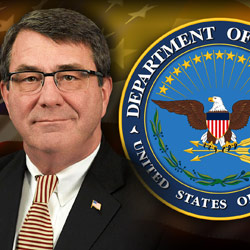 “He (Carter) was instrumental in reviving the US-India defence
relationship, a major development that continues to bear fruit, and he
has helped forge new security ties with former Communist bloc nations,”
House Democratic Whip Steny H Hoyer said after President Barack Obama
nominated Carter.
“He (Carter) was instrumental in reviving the US-India defence
relationship, a major development that continues to bear fruit, and he
has helped forge new security ties with former Communist bloc nations,”
House Democratic Whip Steny H Hoyer said after President Barack Obama
nominated Carter.
Hoping that the Senate will confirm Carter quickly so he can get to work without delay, Hoyer said Carter is an excellent choice to serve the next Secretary of Defence.
“He has the experience and the judgment required to lead the Department of Defence as it confronts ISIL in Iraq and Syria, brings our troops safely home from Afghanistan, and counters threats against the United States and our allies around the world,” he said.
Congressman Mac Thornberry, Chairman-elect of the House Armed Services Committee, said Carter knows the Pentagon, and he knows that some reforms are essential if they are to meet the national security needs of the country.
Welcoming the nomination, Senator Jim Inhofe, ranking member of the Senate Armed Services Committee, said he has worked with Carter over the years and consider him qualified for the position and look forward to his confirmation hearing.
Senator John McCain said Carter is a highly competent, experienced, hard-working, and committed public servant.
“Throughout Carter’s previous tenure at the Pentagon, I have worked closely with him on a number of issues, including defence acquisition reform,” he said, adding that he was looking forward to his confirmation hearing.
Senator Lindsey Graham said Carter has the knowledge and capability to serve as Secretary of Defence during these difficult times.
“I expect he will face tough questions at his confirmation hearing about President Obama’s failing national security policy, but I expect he will be confirmed,” the Republican Senator said.
Senator Carl Levin, chairman of the Senate Armed Services Committee, said Carter is highly qualified and experienced, and well-versed in the challenges that the next secretary of defence will face.
“Carter understands the threats that confront our country and I believe his experience at the Pentagon will make him an effective leader for our military. Given the many critical national security issues confronting the United States, it is my hope that the Senate will work swiftly to consider and confirm President Obama’s nominee to this critical post,” Senate Majority Leader Harry Reid said.
Source : Defence News

Hoping that the Senate will confirm Carter quickly so he can get to work without delay, Hoyer said Carter is an excellent choice to serve the next Secretary of Defence.
“He has the experience and the judgment required to lead the Department of Defence as it confronts ISIL in Iraq and Syria, brings our troops safely home from Afghanistan, and counters threats against the United States and our allies around the world,” he said.
Congressman Mac Thornberry, Chairman-elect of the House Armed Services Committee, said Carter knows the Pentagon, and he knows that some reforms are essential if they are to meet the national security needs of the country.
Welcoming the nomination, Senator Jim Inhofe, ranking member of the Senate Armed Services Committee, said he has worked with Carter over the years and consider him qualified for the position and look forward to his confirmation hearing.
Senator John McCain said Carter is a highly competent, experienced, hard-working, and committed public servant.
“Throughout Carter’s previous tenure at the Pentagon, I have worked closely with him on a number of issues, including defence acquisition reform,” he said, adding that he was looking forward to his confirmation hearing.
Senator Lindsey Graham said Carter has the knowledge and capability to serve as Secretary of Defence during these difficult times.
“I expect he will face tough questions at his confirmation hearing about President Obama’s failing national security policy, but I expect he will be confirmed,” the Republican Senator said.
Senator Carl Levin, chairman of the Senate Armed Services Committee, said Carter is highly qualified and experienced, and well-versed in the challenges that the next secretary of defence will face.
“Carter understands the threats that confront our country and I believe his experience at the Pentagon will make him an effective leader for our military. Given the many critical national security issues confronting the United States, it is my hope that the Senate will work swiftly to consider and confirm President Obama’s nominee to this critical post,” Senate Majority Leader Harry Reid said.
Source : Defence News
Thursday, 20 November 2014
India, Australia To Strengthen Strategic Ties, Counter China
Indian Prime Minister Narendra Modi has made a
clear indication that New Delhi is fully prepared to counter Beijing’s
increasing influence in the Asia Pacific region.
|
||

Indian Prime Minister Narendra
Modi has made a clear indication that New Delhi is fully prepared to
counter Beijing’s increasing influence in the Asia Pacific region. On
Tuesday, Modi and his Australian counterpart Tony Abbott decided to
bolster the bilateral strategic partnership on the basis of ‘converging
political, economic and interests’. In Canberra, the two PMs discussed
various aspects of bilateral relations and expressed serious concern
over China’s attempts to increase its influence in the Indian Ocean
region.
Modi and Abbott finalised a framework for security co-operation between the two countries. They also decided to hold annual meeting to assess the co-operation. According to the statement issued by the Indian External Affairs Ministry, the defence ministers of the two ‘friendly’ nations will hold regular meeting in the coming days. India and Australia will also hold annual defence policy talks and regular joint naval manoeuvres, apart from co-operating in defence research and development. Meanwhile, the Australian media reported that the confirmation of the security framework came only after Chinese President Xi Jinping’s departure from Canberra (after attending the G20 Summit). Political experts are of the opinion that the current geopolitical situation in the Asia Pacific region has forced New Delhi and Canberra to strengthen bilateral defence ties. As China is racing ahead of Australia, Japan and India, the interests of Canberra, Tokyo and New Delhi have sharply converged. As a result, India and Australia announced the new ‘Framework for Security Co-operation’ for close collaboration in defence, counter-terrorism, cyber security and maritime security. In a joint statement, governments of the two countries said: “Prime Minister (Narendra) Modi and Prime Minister (Tony) Abbott decided to extend defence co-operation to cover research, development and industry engagement. They agreed to hold regular meetings at the level of the defence minister, conduct regular maritime exercises and convene regular Navy to Navy, Air Force to Air Force and Army to Army staff talks.” Although the two leaders further decided to push for a free trade pact between their countries, the defence co-operation was more important. Former Indian Foreign Secretary Kanwal Sibal said that it was a crucial development and the Modi administration pursued a strategy to protect the region from China’s unpredictable actions. “The Modi government is playing its cards astutely. While India is taking steps to improve economic ties with China, it is also pursuing a strategy aimed at checking China. It’s a wise approach,” he told the ‘Hindustan Times’ daily. Indian defence analyst Lieutenant General (Retired) B S Jaswal stressed: “Beijing’s hegemonic attitude will continue if not checked.” Israel, too, is eager to ramp up strategic ties with India. A couple of days back, Israel said that China is its trading partner, but India is a ‘strategic’ one. The Israeli authorities also announced that they would not revive arms trade with Beijing in the future. With sales worth USD 1 billion-USD 1.5 billion every year, India is currently No 1 arms market for Israel and Jerusalem is planning to concentrate only on the South Asian country in the region as far as the arms trade is concerned. In its latest report, the Israeli Defence Ministry said that the West Asian nation currently exports defence equipment worth USD 7 billion annually to India, but hardly anything to China in the last decade. The volume of annual trade between India and Israel is around USD 5 billion and the signing of a Free Trade Agreement can easily double the volume, the report said. While welcoming the Indian PM’s commitment to taking ties with Israel to a new level, senior Israeli officials have said that no one should question Jerusalem’s relation with Beijing and dilute it with the strategic partnership with New Delhi.
Source : Defence News
|
Friday, 17 October 2014
India test-fires nuclear-capable Nirbhay cruise missile
BALASORE (Odisha): India’s indigenously developed
nuclear capable sub-sonic cruise missile ‘Nirbhay’, which can strike
targets more than 700 kms away, was today test-fired from a test range
at Chandipur near here.
|
||

“The missile was test-fired from a mobile launcher positioned at launch
pad 3 of the Integrated Test Range at about 10.03 hours,” said an
official soon after the flight took off from the launch ground.
“Flight details will be available after data retrieved from radars and telemetry points, monitoring the trajectories, are analysed,” the official said. It is the second test of the sub-sonic long range cruise missile ‘Nirbhay’ from the ITR. The maiden flight, conducted on March 12, 2013 could not achieve all the desired parameters as “the flight had to be terminated mid-way when deviations were observed from its intended course,” sources said. India has in its arsenal the 290 km range supersonic “BrahMos” cruise missile which is jointly developed by India and Russia.
Source: Defence News
|
Friday, 3 October 2014
US rules out trilateral military partnership with India, Japan
Washington: The US has ruled out a trilateral
military partnership with India and Japan, days after it decided to
upgrade its annual trilateral meetings at the ministerial level.
|
||

“No,” Assistant Secretary of State for South and Central Asia Nisha
Desai Biswal told reporters when asked if the India-Japan-US trilateral
diplomatic ties expand to become a military partnership.
“The trilateral relationship between India and Japan is not to be at the exclusion of any other relationships and partnerships in the region. It has its roots on the desire to support economic connectivity across the South Asia and Southeast Asia landscape,” she said. “As you see the transition, the political transition in Myanmar, it has created a new opening and an opportunity to strengthen that connectivity that allows trade to go north, south, east, and west. So the trilateral conversations, have focused on how to do that, how to support trade and economic connectivity across the region,” she added. There are also discussions about how to strengthen humanitarian assistance and disaster response across the region. There’s a great deal of capacity in India. There’s a great deal of capacity in Japan, she noted. Asia is one of the most disaster-prone regions of the world. Over 60 per cent of hydro meteorological disasters that require international assistance occur in the Asia-Pacific region. So another area of discussion has been on creating capabilities and synergies on disaster response, she said. She said there is a very deep interest in strengthening maritime cooperation and maritime security, and India is playing an increasing role in providing that as we look at anti-piracy initiatives and ways to create safe transportation routes and lanes for commerce to be able to take place. “So those have been the nature of the conversations. This is an important trilateral, but I don’t think it comes at the exclusion of other strong, important relationships in the region,” she explained. The US is currently doing joint military exercises with India and with Japan, she said, adding a lot of the countries of the region, including China, have participated in the RIMPAC exercises. “We see these areas not as being exclusive or exclusionary, but we think that the more that we’re able to partner with and work with the militaries of the region, create understanding and capabilities of how we can work together, both in terms of responding to crises when they happen, but also in terms of creating shared understandings,” she said. “I know that we have mil-to-mil conversations in our relationship with China, and we certainly do with many of the other countries of the region. These are conversations that we want to have across the broad expanse of all of our relationships,” she added.
Source: Defence News
|
Thursday, 18 September 2014
STATOISTICS
China started its economic reforms in the late 1970s. In 1980,
China’s GDP–both in absolute and per capita terms in PPP dollars–was
smaller than India. In 1984, the Chinese economy overtook us in terms of
absolute value of output.
Interestingly, until 1991, the year when India started its economic reforms, India’s GDP per capita was higher than China’s. Since then, the gap between the two economies has only widened. Some experts believe that the economic reforms did not work that well in India because before opening its economy China managed to bring some level of social equality by doing land reforms and ensuring access to education to all section of society. Also its economy is growing at a faster rate while the population growth has stabilized

Source : TOI
Interestingly, until 1991, the year when India started its economic reforms, India’s GDP per capita was higher than China’s. Since then, the gap between the two economies has only widened. Some experts believe that the economic reforms did not work that well in India because before opening its economy China managed to bring some level of social equality by doing land reforms and ensuring access to education to all section of society. Also its economy is growing at a faster rate while the population growth has stabilized
Source : TOI
Thursday, 4 September 2014
US endorses India-Japan strategic partnership
WASHINGTON: The US has welcomed the just announced
India-Japan Strategic Partnership and said it is looking forward to
strengthen its trilateral co-operation with them.
|
||

“The US strongly supports India’s collaboration and cooperation with
its neighbours in the Asia Pacific. We actively support such
collaboration through our trilateral dialogue and other activities with
India and Japan, and look forward to strengthening further our
trilateral cooperation,” State Department spokesperson Jen Psaki said.
The US strongly supports a prosperous India playing an important role on the global stage, she said. It is during the Obama Administration that India, Japan and the US have started trilateral meetings. “As we have long said, a strong, prosperous India contributes to regional and global peace and prosperity,” Psaki said responding to questions about Prime Minister Narendra Modi’s visit to Japan this week. During a meeting between Modi and his Japanese counterpart Shinzo Abe, the two sides announced India-Japan strategic partnership and deepening of defence relationship. The Pentagon welcomed the decision of India and Japan and said that the latter’s participation in the Malabar exercise would be routine. “We are very excited that Japan’s participation in Exercise Malabar is becoming routine and believe that credible, ready, and inter-operable maritime forces help to preserve peace, prevent conflict, and foster a spirit of cooperation to meet regional and global challenges for mutual benefit,” Jeffrey S Pool, a Defence Department spokesperson said. American think-tank community has described Modi’s Japan visit a great success. “Modi’s visit to Japan has been lauded by all corners as a great success,” said Alyssa Ayres, Senior Fellow for India, Pakistan, and South Asia at the Council on Foreign Relations, a top American think-tank. “The United States has strongly supported strengthened ties between India and Japan (the US-India-Japan trilateral just one example), and the deliverables announced in the Tokyo Declaration complement components of US-India relations,” Ayres said. The joint emphasis on democracy, upgraded defence relations, science and technology, and a robust catalogue of economic undertakings all illustrate similarity with priorities in the US-India relationship, she said. One major difference lies in the Japanese government’s ability to mobilise large amounts of Overseas Development Assistance, particularly through soft loans, she added. “The Tokyo Declaration puts Prime Minister Abe’s commitment at 3.5 trillion yen over five years (around USD USD 33 billion). That’s a much larger sum than the United States government typically mobilises, and at a time when the US Congress has not renewed the US ExIm Bank’s charter, shows where Washington has a diminished ability to support similar projects,” Ayres said. “Countries like Japan are working with economic policy tools to meet the strategic interests of partners like India, especially on infrastructure. Some good lessons for us here,” she said. Writing for “Asia Unbound” a CFR foreign policy blog, Sheila A Smith wrote that in his five-day visit this week, Narendra Modi has made Japan’s pivot to India even more enticing – and far more likely to succeed. Modi’s election in May has brought more energy to the relationship, she noted. “As the television footage suggested, the two leaders seem to have a good chemistry, and enjoyed their time together. Modi even sent out messages of thanks to Abe via social media as he visited Kyoto and other spots in Japan,” Smith said. Abe, according to her, must be satisfied to see one of his main diplomatic efforts take root. He has put considerable energy into developing new partners and opportunities for balancing China’s rise, and India has long been an option that Tokyo’s strategic thinkers have looked to develop, she observed.
Source: Defense News
|
Monday, 1 September 2014
For First Time Since World War 2, Japan Will Sell Military Equipment. To India
TOKYO: During his visit to Japan, Prime Minister Narendra Modi may not have closed a deal on nuclear energy cooperation, but he is returning with a pledge from counterpart Shinzo Abe for nearly 34 billion dollars in investment over the next five years, and the sale of an amphibious aircraft to India's navy. The deal marks the intent of Asia's second and third largest economies to counter an increasingly aggressive China.

The specialised sea-plane, the US-2, will be Japan's first overseas military sale in nearly 50 years. Because it provides landings on sea and land, the plane will significantly enhance the Indian Navy's ability to carry out, casualty evacuations, deliver humanitarian assistance and conduct long-range surveillance and reconnaissance.
In keeping with Mr Modi's emphasis on developing military technology indigenously to check India's dependence on foreign defence manufacturers, the US-2 planes will be made in India. The Indian Navy has been lobbying to get 15 of these.
A statement issued in Tokyo after Monday's summit between Prime Ministers Modi and Abe said "both sides directed the Joint Working Group to accelerate progress in the discussions and preparations for a road map for the development of the Indian aircraft industry through US-2 amphibian aircraft cooperation including the transfer of the aircraft and its technology to India."
This is the first time since World War-II ended seven decades ago that Japan will be selling military hardware abroad. Following its defeat, Japan had imposed an embargo on sale of weapons and military equipment.
The four-engine US-2 aircraft will act as a force multiplier for the Indian Navy, allowing it to quickly insert troops at places where there is no landing strip on shore, including the numerous far-flung islands in Andaman and Nicobar and Lakshwadeep.
Currently, ground troops are delivered to areas like this using a 'Landing Ship Tank' which isn't always effective. The Sea Planes will allow faster troop insertion of small clusters of soldiers for specialised operations.
India's coastline runs nearly 7,500 kilometres and the Navy had earlier projected a requirement of 15 such sea planes, but their acquisition was stalled by a shortage of funds and other competing requirements, seen as more urgent - like acquiring multi-role helicopters, torpedoes, submarines and ships.
The US-2 is one sturdiest aircrafts and can operate in sea state 5 conditions (wind speed of 30 to 38 km per hour) on the high seas as well as on rivers and lakes. Each plane can carry about 30 personnel and lift 18 tonnes and fly 4,500 km at stretch without needing to stop for refuelling.
Story First Published: September 01, 2014 21:30 IST
Source: NDTV
Mahindra & Mahindra prefers consortium for defence; in talks with BAE, others

NEW DELHI: Learning from past experience in bidding for defence orders in India, Mahindra & Mahindra has decided to go the consortium way and is talking to global players, including erstwhile joint venture partner BAE.
"What we have discovered was that it's better to work as consortium because we have so many areas of interests right now," Mahindra Group Chairman and Managing Director Anand Mahindra told PTI in an interview.
Last year in February, the group had ended its joint venture with BAE Systems by buying out the partner's 26 per cent stake. The JV was formed in 2009 with plans of supplying artillery howitzers and anti-mine vehicles to the Indian armed forces.
"We dismantled the JV because we ran out of patience. Nothing was happening," he said.
Mahindra said that with the new government led by Narendra Modi in place, things have started to move now.
"They are moving. In certain areas like defence, RFPs (request for proposals) are being floated now," he said.
Elaborating on the group's decision to form consortium rather than enter into JVs, he said: "It's just a practical decision, which we have taken that given the number of areas we are in, we are probably better off bidding for large projects... JV is not the right way to do it. The right way to do is through consortium."
When asked about global players that the group was talking for such projects, Mahindra said: "We are in fact talking to the BAE again and to all the others... We are talking to BAE for the same bid, but we are saying that we do not know, so let's not go through the JV thing once again. Let's form a consortium."
He said while the easing of FDI norms to allow up to 49 per cent in defence was welcome, what was more important was to take "quick and transparent" steps.
"Suddenly we find out RFPs are being made. Will it be followed up? Will spending be carried out? Will the process be quick and transparent?" he wondered.
Mahindra further said: "Even at 26 per cent we had the partner BAE and they were ready to do business. That's not the problem. The problem was is the process of procurement happening. Is it happening transparently and predictively? And that's what will change defence and get production in."
Source :Economics TImesWednesday, 27 August 2014
Indian Defense Ministry to decide fate of Rs 6,000 cr light helicopter deal
New Delhi: The Defence Ministry will decide the
fate of the controversial Rs 6,000 crore deal to procure 197 light
choppers which has been on hold due to an ongoing CBI probe into charges
that a Brigadier had sought bribe from AgustaWestland to help it bag
the contract.
|
||

During a meeting of the Defence
Acquisition Council (DAC) scheduled this week, the Defence Ministry will
also discuss deals worth around Rs 15,000 crore for procuring Apache
attack helicopters and Chinook heavylift choppers for the IAF from the
US, Defence Ministry officials said.
The DAC, headed by Defence Minister Arun Jaitley, is scheduled to take up the deal for discussion in its meeting where it is expected to decide its fate, they said. The 197 light utility choppers are to be procured for the Army and the IAF who use them for ferrying troops and supplies in high altitude areas such as Siachen Glacier and would be used to replace the vintage Cheetah/Chetak choppers which were inducted 40 years ago. CBI has been probing allegations against the Brigadier which surfaced during investigations into the VVIP chopper deal about the alleged involvement of AgustaWestland in paying kickbacks to secure the Indian contract for 12 VVIP choppers. CBI probe was ordered by the Defence Ministry after the Army requested it to investigate the charges against the Brigadier before taking any decision on the future developments in the deal. Allegations have been levelled against the Brigadier in a letter allegedly sent by an AgustaWestland official in India to his superiors in Italy saying the officer was seeking USD 5 million for facilitating the deal in their favour. Only two firms European Eurocopter and Russian Kamov are left in the race for the deal to supply 197 light choppers to the Army and the IAF as AgustaWestland was knocked out of the deal in the preliminary stages itself. The deal for procuring 197 light choppers has already been cancelled once in 2007 in the last stages. The Brigadier has denied the charges made against him. |
||
 Source : Zee News |
India imposes ‘Partial Ban’ on Finmeccanica
NEW DELHI: India will not ink fresh arms deals with
Finmeccanica, if other armament companies can provide the same
equipment, but will allow ongoing contracts with the Italian
conglomerate to continue unhindered.
|
||

This “partial ban” — instead of
what could have been a “complete” one — was officially notified by the
defence ministry on Tuesday. It will come as “a major breather” for
Finmeccanica, all dealings with which were earlier put on hold after its
UK-based subsidiary AgustaWestland got enmeshed in the infamous VVIP
helicopter kickbacks case.
It also marks a shift from the earlier UPA era, under A K Antony as defence minister, where there was “indiscriminate blacklisting” of armament companies after allegations of corruption and bribery. “It often proved counter-productive. The aim now is not to block military acquisitions and spares, even as any wrongdoing is punished,” said an official. This is the second such case after the Narendra Modi government ruled out blacklisting of global engine manufacturer Rolls-Royce, which too is under CBI scanner for allegedly employing agents, on the grounds of “operational urgency and national security”. As was first reported by TOI on August 7, attorney general Mukul Rohatgi had advised the MoD that a complete ban or blacklisting of the entire Finmeccanica group, which produces warship guns and torpedoes to helicopters and radars, would jeopardize the battle-readiness of the armed forces. On Tuesday, the MoD issued a graded set of guidelines for dealings with Finmeccanica: * It will go ahead with all contracts under execution. Contracts already executed but requiring supply of spares and upgrades on a regular basis will also continue. This means ongoing contracts for manufacture of 76mm warship guns by BHEL under licence from Otomelara, a subsidiary of Finmeccanica, as well as those for Selex radars and electronic systems will continue. * Contracts where any Finmeccanica company is a sub-contractor or supplier to the main contractor will also continue. So, Russian upgrades of the Kamov-28 anti-submarine helicopters, where a Finmeccanica company is a supplier, will go-ahead. * All acquisition cases where Finmeccanica has been declared L-1 (lowest bidder) after competition shall be put on hold till further orders. A special exception for the Rs 1,800 crore project to buy 98 ‘Black Shark’ heavyweight torpedoes for the Scorpene submarines being constructed at Mazagon Docks is likely to be done. * In an ongoing tender process, in which L-1 has not been declared, Finmeccanica may not be considered if other vendors are available. But Finmeccanica may remain in the fray to supply naval multi-role helicopters to avoid a single-vendor situation. * A fresh tender or RFP (request for proposal) will not be issued to Finmeccanica if there are other vendors which can provide the same equipment or system. This could rule out Otomelara from participating in the new project for heavy 127mm guns India is now looking for new warships. As earlier reported by TOI, one estimate holds Finmeccanica, apart from ongoing contracts like the supply of Selex radars or Otomelara naval guns, is in contention for Indian military contracts worth over $6 billion. The crucial ones include the Rs 1,800 crore project to buy 98 ‘Black Shark’ heavyweight torpedoes, manufactured by another Finmeccanica subsidiary Whitehead Alenia Sistemi Subacquel (WASS) for the six Scorpene submarines being built at Mazagon Docks in Mumbai. Another case is for the procurement of naval multi-role helicopters (MRHs), with the contenders being European NH-90 choppers, which have Finmeccanica as a partner, and the American Sikorsky-70B choppers. The first contract for the 16 MRHs is to be followed by a bigger one for 123 helicopters at a cost of over $3 billion. |
||
 Source : TNN |
Thursday, 21 August 2014
Indian firms tool up for defence orders on Modi’s ‘buy India’ pledge
(Reuters) – Some of India’s biggest companies are
pouring billions of dollars into manufacturing guns, ships and tanks for
the country’s military, buoyed by the new government’s commitment to
upgrade its armed forces using domestic factories.
|
||

India, the world’s largest arms
importer, will spend $250 billion in the next decade on kit, analysts
estimate, to upgrade its Soviet-era military and narrow the gap with
China, which spends $120 billion a year on defence.
Under the last government, procurement delays and a spate of operational accidents – especially dogging the navy – raised uncomfortable questions over whether India’s armed forces are capable of defending its sea lanes and borders. Even before his landslide election victory in May, Prime Minister Narendra Modi promised to assert India’s military prowess and meet the security challenge posed by a rising China and long-running tensions with Pakistan. Within weeks of becoming prime minister, he boosted defence spending by 12 percent to around $37 billion for the current fiscal year and approved plans to allow more foreign investment into local industry to jump-start production. Launching a new, Indian-built naval destroyer last week, Modi said: “My government has taken important steps in improving indigenous defence technology … We can guarantee peace if our military is modernised.” This build-up comes as Southeast Asian nations expand their own defence industries, spurred by tensions with China. India, reliant on a state defence industry that often delivers late and over budget, risks being caught flat-footed. “The opportunity is huge,” said M.V. Kotwal, president (Heavy Engineering) at Larsen and Toubro Ltd, one of India’s biggest industrial houses. “We really expect quicker implementation. There are signs that this government is very keen to grow indigenisation,” added Kotwal, referring to increasing domestic production. Tata Sons, a $100 billion conglomerate, said last month it will invest $35 billion in the next three years to expand into new areas with a focus on a handful of sectors including defence. Larsen is putting $400 million into a yard to build ships for the navy, while Mumbai-based Mahindra Group is expanding a facility that makes parts for planes, including for the air force, and investing in armoured vehicle and radar production. The companies are being lured by the prospect of lucrative returns on their investments as the Modi government has pledged to make “buy Indian” the default option for future orders. Larsen is targeting a fourfold increase in annual defence revenue to $1 billion within the next five years. Critics of indigenisation argue that producing gear – especially in the lumbering state sector – is more costly than buying from abroad. Such deals can add layers of bureaucracy, increasing risks of corrupt dealings. Indian industry is renowned for its ability to adapt, yet questions remain whether the private sector can come up with the solutions needed to bring armed forces into the 21st century without sufficient access to world-class foreign technology. DELAYS Some companies are also sceptical of the government’s commitment to grow the private market given New Delhi’s history of delays and order cancellations, and the traditionally strong ties between the military and state-run manufacturers. They cite the case of a $10 billion Future Infantry Combat Vehicle (FICV) programme. Conceived in 2009, the defence ministry invited three private players and the Ordnance Factory Board, a state entity, to bid for the 2,600-vehicle contract but suddenly withdrew the letter of intent in 2012. Bidders included Mahindra and Tata, which is developing a vehicle along with Lockheed Martin Corp and General Dynamics Corp that could compete for a future contract, said Rahul Gajare, an analyst at Edelweiss Securities. A quick decision to relaunch the programme would demonstrate Modi’s resolve, said S.P. Shukla, who heads Mahindra’s defence business. Past tenders have stalled amid wrangling over whether or not to allow state manufacturers to bid and under what terms. Larsen’s Kotwal said its Kattupalli shipyard in south India has yet to receive any orders for warships or submarines despite being designed to do just that and despite past government pledges to build at least two submarines in private yards. In the meantime, the yard has switched to constructing and repairing commercial vessels. “The policy in India has been right since 2006. The problem has been implementation,” said Rahul Chaudhry, CEO at Tata Power SED, which makes rocket launchers, sensors and radars. Local firms have captured a fraction of the Indian defence market since it first opened to private participation in 2001. Consecutive governments have handed orders to state factories or to foreign giants like Boeing, Lockheed and BAE Systems. Gajare at Edelweiss estimates total India private sector revenues from defence, including overseas orders, at below $2 billion last year, less than 6 percent of the country’s defence spending.
Source :Defence News
|
Monday, 18 August 2014
Rafale fighter jet deal contract with France almost ready: Defence ministry
The much-awaited multi-billion Rafale combat
aircraft deal with France has moved a step further with the defence
ministry finalizing a ‘draft contract’, according to top defence
ministry officials.
|
||

Rafale was declared the lowest
bidder in Janaury 2012 but the deal has not been inked so far on account
of escalation in the cost. The Cost Negotiation Committee, which was
set up in February 2012 to work out the modalities for the deal has not
reached a conclusion after 30 months of negotiations.
The government raised its concerns over this last month, during the visit of French foreign minister Laurent Fabius to New Delhi. “Yes, we are in the process of finalizing the draft contract for the deal. And we also expect the Cost Negotiation Committee to submit its report soon,” said a senior defence ministry official, who was privy to the developments. But the official refused to give a time frame for inking the deal. “It is very difficult to predict any date for signing the contract. But, it should happen in the next few months,” the officer said, requesting anonymity. The Indian Air Force (IAF), which is coping with a depleted combat strength, claims that even if the deal is signed by the end of the year the first lot of Rafale aircraft would arrive only by 2017, by which time the IAF would have to phase out its MiG-21 squadrons. The likelihood of an early signing is encouraging. Besides, the ruling NDA government has promised to address all the needs of the armed forces to ensure defence preparedness. According to officials privy to the development, the defence ministry has asked representatives of M/s Dassault Aviation – the French manufacturer of Rafale aircraft – to revise the price structure which has gone beyond expected estimates. Officials claim that when the tender was floated in 2007 the cost of the programme was $12 billion (Rs42,000 crore).When the lowest bidder was declared in January 2012, the cost of the deal shot up to $18 billion (Rs90,000 crore). Now with the inclusion of transfer of technology, the life cycle cost and creation of an assembly line, the deal has climbed to a whopping $20 billion. The air force is seeking to replace its aging MiG-21s with a modern fighter and the medium multi-role combat aircraft (MMRCA) fits between India’s high-end Sukhoi-30MKIs and the low-end Tejas LCA lightweight fighter. The IAF has a sanctioned strength of 45 fighter jet squadrons. However, only 30 squadrons are operational as old aircraft have been retired. Eighteen of the 126 new aircraft are to be purchased directly from Dassault and Hindustan Aeronautics Limited will manufacture 108 under a licence, at a new facility in Bangalore. Defence minister Arun Jaitley informed parliament last week that “given the complexity of the procurement case, the process of negotiations with Dassault Aviation on various aspects of the commercial proposal and provisions of draft contract is on.” Dassault Aviation emerged as L-1 bidder for procurement of the MMRCA based on its quotation.
Source : Defence NEws
|
Saturday, 16 August 2014
Indian defence modernisation plan needs pragmatic action
The Army’s war waging capability is increasingly
handicapped. Concerned with dwindling operational preparedness and
operationally hard pressed, it wants to induct advanced technology
hardware that it perceives would serve its operational needs optimally.
|
||

The NDA government has
identified defence reforms and building a self sustaining defence
industrial base as a priority reform sector. To transform this into
reality, it is not so much of the government commitment but its ability
to take policy decisions and put processes in place by spurring public
and private sector investments through higher indigenisation, transfer
of technology, simplifying procedures, etc.
The Army’s war waging capability is increasingly handicapped. Concerned with dwindling operational preparedness and operationally hard pressed, it wants to induct advanced technology hardware that it perceives would serve its operational needs optimally. However its efforts at modernising be it combat or combat support arms are hardly encouraging – plagued by procurement and indigenous production delays and lack of timely planning. The Parliamentary Standing Committee on Defence’s figures reveals that the army’s equipment modernisation is steadily falling. In 2008-09, the army spent 27 paisa of every rupee on capital expenditure. This fell to 24 paisa in 2009-10; 23 paisa in 2010-11; 20 paisa in 2012-13 and just 18 paisa in the last two years. Indian army’s mechanised fleet comprises T-72 and T72 M1s Main Battle Tanks (MBTs), T-90S MBTs and indigenously produced Arjun MKI tanks. The main issue facing operational efficiency of mechanised forces are two: night fighting capability and ammunition. Resultantly the army’s ambitious plans to transform from a ‘threat-based to a capability force’ by 2020 are being consistently thwarted as a result of process driven MoD breaucracy and the Army headquarters delays in drawing up credible qualitative requirements. Army’s Modernization Perspective :: Let us take the armour first. Indian army’s mechanised fleet comprises T-72 and T72 M1s Main Battle Tanks (MBTs), T-90S MBTs and indigenously produced Arjun MKI tanks. The main issue facing operational efficiency of mechanised forces are two: night fighting capability and ammunition. In so far as night fighting capability is concerned only the 650-odd Russian T90S MBTs along with indigenously designed Arjun MKI tanks have full solution night fighting capability. T-72 and T72M1s that form the backbone of 59-odd armour regiments along with some 2200 Soviet-designed BMP-II infantry combat vehicles (ICVs) lack night fighting capability. Majority of the T72s await upgrades that will provide them with either full solution thermal imaging fire control systems (TIFCS) or third generation partial solution thermal imaging stand alone systems (TISAS) enabling all weather including night operations. Till date only 620 partial solution TISAS have been acquired. In terms of armour ammunition there is critical deficiency of anti tank ammunition; 125 mm armour piercing fin-stabilised discarding sabot (APFSDS). Indigenous production is held up on account of black listing of Israeli company, resultantly availability of 125 mm APFSDS including war wastage reserves have dropped to critical levels necessitating urgent imports of around 66,000 rounds from Russia at highly inflated prices. Next major deficiency is that of Artillery, where no new gun has been inducted in last three decades. Despite years of attempts at modernisation; army’s artillery profile remains beseeched by the inability to decide on the 155 mm gun to replace the 180-odd field artillery regiments employing as many as six different calibres that are fast approaching obsolescence. Even the 32 artillery regiments equipped with 410 FH-77B 155 mm Bofors guns imported in the late 1980s-are reduced to half following cannibalization owing to the non-availability of spares. Upgradation of approximately 200 Soviet 130 mm M-46 carried out jointly by the Ordnance Factory Board and Soltam of Israel has been unsatisfactory resulting in CBI enquiry. The proposal under the Artillery Rationalisation Plan to acquire by 2020-25 a mix of around 3000-3600; 155mm/39 calibre light weight and 155mm/52 calibre towed, mounted, self-propelled (tracked and wheeled) and ultra light weight 155mm/39 calibre howitzers through imports and local, licensed manufacture have been continually postponed for over a decade. Tenders for almost all these guns have been issued, withdrawn and re-issued, along with several rounds of inconclusive trials. Matters have been further complicated by the MoD completely or partially blacklisting at least four top overseas howitzer manufacturers. The infantry’s F-INSAS (Future Infantry Soldier as a System) project that includes a fully networked, all-terrain, all-weather personal equipment platform as well as enhanced firepower and mobility for the digitalised battlefield of the future continues to be abnormally behind schedule. Similarly eight-odd Special Forces battalions face an identity crisis, operating without a specialised operational mandate, organisational support or “dedicated budget” resulting in piecemeal and incomplete weapon and equipment packages. Adding to the Infantry’s woes is the shortages of credible assault rifles (ARs), carbines, ballistic helmets, lightweight bullet proof jackets and night vision devices. These are largely produced indigenously. Last year the MoD issued a global tender for 66,000, 5.56 mm ARs for an estimated $ 700 million to replace the locally designed Indian Small Arms System (INSAS). The eventual requirement for the proposed AR is expected to be around 2 million units for use not only by the army but also the paramilitary forces and the numerous provincial police forces in a project estimated to cost around $3 billion. Other infantry shortages include; close quarter battle carbines, general purpose machine guns, light-weight anti-materiel rifles, mine protected vehicles, snow scooters for use at heights above 21,000 feet in Siachen, 390,000 ballistic helmets, over 30,000 third generation NVDs, 180,000 lightweight bullet proof jackets together with other assorted ordnance including new generation grenades. Similar is the story of air defence. The bulk of the army’s air defence guns – Bofors L 70s and the Soviet Zu-23-2s and ZUS-23-4s and missiles like the Russian OSA-AK and Kradvat – date back 30-40 years and need replacing. The Army Aviation also faces similar shortages. There is an urgent need to replace obsolete aviation assets like the Chetak and Cheetah helicopters. Acquisition of 197 helicopters under the Army Aviation Corps Vision 2017 was postponed after the procurement of Eurocopter AS 550 C3 Fennec was scrapped in November 2007. Four years later after trials, evaluation and negotiation the contract is under re-assessment featuring Russia’s Kamov 226 and Eurocopter’s AS 550 models, with little chance of early conclusion. Addressing Army’s Modernization Needs :: The major issue that emerges is how will the army get out of the vicious cycle of delays in procurement, and get its modernisation plans back on track. Is it feasible to undertake an all encompassing procurement backed by indigenous production taking the transfer of technology (TOT) route? What are the likely constraints? Let us take a look at the budgetary support first? The Defence Budget for 2014-15 has an allocation of Rs. 2, 29,000 crores ($38 billion) an increase of 12 per cent over the previous year’s allocation. The capital outlay is Rs.94, 588 crores ($15.7 billion), and the remaining allocation of Rs. 1, 34,412 crores is the revenue outlay. The sub allocation of capital outlay to Army is Rs. 20, 655 crores, Navy Rs. 22, 312 crores, Air force Rs. 31,818 crores, DRDO Rs.9298 crores and modernization of Ordnance Factories (OFs) Rs. 1, 207 crores. While the figures might look impressive it needs to be noted that fairly large amount of capital outlays get consumed by committed liabilities leaving fairly modest amounts for new procurements. Second, even if the money was available how can the army make up such huge shortages in any acceptable time frame? Procurement procedures, deciding on vendors for transfer of technology, issues regarding off sets, participation of the private sector and above all skill development are long drawn process which in the best case can take anything from 5 to 7 years. To deal with the problem two critical aspects need to be addressed: One, the nature of future threats both in short-and-medium-to-long-terms basis. If the trigger for conflicts is likely to be unacceptable provocation requiring immediate military response; this requires basic level of preparedness and modernization to deal with such contingencies. Two, the long-term capability needs require a more nuanced and detailed induction perspective more attuned to R&D, technology transfers and indigenous production, etc. The essential take away from the above analysis is two-fold – laying down induction priorities and tri service synergy. [Author Brigadier (Retd.) Arun Sahgal, PhD, is Deputy Director Research and Head, Centre for Strategic Studies and Simulation, at the United Service Institution of India. He is a member of National Task Force on Net Assessment and Simulation, under the NSCS, Government of India.]
Source : Defence News
|
Tuesday, 12 August 2014
Why is India offering to buy more US helicopters
(Reuters) – India has offered to significantly
increase an order for U.S. attack helicopters, Indian officials said, as
U.S. Defense Secretary Chuck Hagel began a visit to New Delhi on
Thursday aimed at boosting defence and strategic ties.
|
||

The Apache gunships and a deal
for Chinook helicopters, both built by Boeing, will top the agenda in
Hagel’s talks on Friday with the new administration led by Prime
Minister Narendra Modi.
India has offered a follow-on order of 39 AH-64D Apache helicopters in addition to the 22 now being negotiated, a Defence Ministry official said. The sides have been wrangling over the price of the gunships, however, with the initial deal having been estimated to be worth $1.4 billion. The two countries have rapidly expanded military and business ties in recent years, despite discord over issues such as intellectual property rights and market access. Washington is keen to step up cooperation across the board, seeing India as a strategic partner in the face of an increasingly powerful and assertive China. According to defence research firm IHS Jane’s, India was the top foreign buyer of U.S. arms last year. An Apache deal would be the first big military contract since Modi’s government took office in May. Hagel’s trip follows one by U.S. Secretary of State John Kerry last week and is part of the build-up to talks between Modi and President Barack Obama in Washington in September. Hagel’s talks will also cover military exercises and co-production and co-development of armaments and the renewal of a 10-year defence cooperation agreement that runs until 2015. Hagel said the purpose of his visit went beyond arms sales. “Our interests are varied and common – stability, security, economics, possibilities, freedom,” he said en route to India. “I’ll be there, working, yes, our specific issues, but it’s larger … than that.” “WE NEED PARTNERS” Hagel said Asia-Pacific was a region of great opportunities, but also of challenges. “We need partners. We need relationships. That’s the kind of world we live in, and that’s the kind of world that we’re going to be living in.” Speaking to reporters on his plane, Hagel was asked about India’s apparent reluctance to be seen as a full U.S. ally and he replied that Washington was “mindful” of India’s tradition as a independent, non-aligned state. “We’re not trying to change that,” he said. “But…we have common interests, and…we think there’s more potential to build on those common interests.” U.S. officials say there is the potential for billions of dollars of new arms sales in the next few years and hope Modi can overcome bureaucratic obstacles that have held up some. Last month, India’s cabinet cleared a proposal to allow 49 percent foreign participation in the defence industry, up from a current cap of 26 percent. Hagel said he would be looking at whether there would be the potential to go beyond 49 per cent something U.S. defence firms want before allowing technology transfers India craves. The initial batch of Apache helicopters is meant to replace the Indian Air Force’s ageing fleet of Soviet-era aircraft and will be armed with Hellfire and Stinger missiles. The Indian Army has separately requested a fleet of at least 39 of these attack aircraft, some of which will be deployed as part of a new mountain division it is raising along the disputed border with China, an army official said. “The point is we are looking at 60 to 70 pieces eventually, so the expectation is the vendor will factor that in, in the price negotiations,” said the defence ministry official, who asked not to be identified in line with ministry policy. U.S. defence sales to India have grown from the low hundreds of millions of dollars in the decade to 2008 to more than $9 billion since that year.
Source : defencenews.in
|
Saturday, 9 August 2014
FDI in defence may go up to 100% if CEO is Indian
Global defence equipment majors such as BAE Systems and Lockheed
Martin could set up manufacturing units in India and bring in foreign
direct investment (FDI) exceeding 49 per cent, provided the company’s
chief executive officer (CEO) is Indian.
As the objective was to let only serious players enter the market, the defence FDI policy approved by the Cabinet on Wednesday categorically stated investee companies should be self-sufficient in product designing and have maintenance and life cycle support facilities for the products they manufactured here, said a senior department of industrial policy and promotion (DIPP) official.
 The Union Cabinet had approved an increase in the composite foreign
investment cap in the defence sector from 26 per cent to 49 per cent.
For investment exceeding 49 per cent, the Cabinet Committee on Security
(CCS) will clear applications on a case-by-case basis.
The Union Cabinet had approved an increase in the composite foreign
investment cap in the defence sector from 26 per cent to 49 per cent.
For investment exceeding 49 per cent, the Cabinet Committee on Security
(CCS) will clear applications on a case-by-case basis.
“It could go up from 49 to 100 per cent, depending on modern and state-of-the-art technology, with the approval of the CCS,” said the DIPP official.
The CCS might consider such proposals only in rare cases in which original equipment manufacturers such as BAE Systems, Lockheed Martin, Airbus Group and Sikorsky intend to set up manufacturing units here.
This is aimed at ensuring only top defence original equipment manufacturers, with robust and proven track records, enter the market, with large-scale investment proposals. The government is hopeful this will not only lead to more manufacturing facilities in the country, but also ensure the life cycle of products is catered to by foreign companies.
The CCS will see to it that the management and control remains with Indian companies in case the FDI exceeds 49 per cent, more so in case it is more than 51 per cent, on a case-by-case basis. The official said in these cases, the CEO had to be Indian.
However, experts say subjective norms such as modern and state-of-the-art technology, self-sufficiency in product designing and maintenance and life cycle facilities will be hurdles to attracting FDI.
Amber Dubey, partner and head of aerospace and defence, KPMG in India, said, “Subjective conditions such as local design, maintenance repair and overhaul, lifecycle support facility and state-of-the-art technology run the risk of interpretation, delays, misuse and litigation. Once an original equipment manufacturer wins a competitive tender, market forces will force these to be transferred to India in stages.”
Putting onerous preconditions ended up discouraging serious investors, Dubey said, adding the government could, instead, bring in practical checks and balances that would help build a strong defence industrial base in India through 10-15 years.
“The CEO has to be an Indian national by default, from the perspective of national security and individual accountability. It would be practically difficult to get a CEO of foreign nationality extradited to India and prosecuted in case of an adverse event,” he said.
Officials said all foreign institutional investment up to 24 per cent would be allowed under the automatic route. The DIPP official said proposals related to FDI exceeding 26 per cent would be approved on a case-to-case basis, apparently due to “national security concerns, as it (defence) is a highly sensitive sector”.
Since the Indian defence sector was opened to private companies in 2001, barely $5 million of FDI has flowed into it, according to official statistics.
Nayanima Basu in New DelhiAs the objective was to let only serious players enter the market, the defence FDI policy approved by the Cabinet on Wednesday categorically stated investee companies should be self-sufficient in product designing and have maintenance and life cycle support facilities for the products they manufactured here, said a senior department of industrial policy and promotion (DIPP) official.
“It could go up from 49 to 100 per cent, depending on modern and state-of-the-art technology, with the approval of the CCS,” said the DIPP official.
The CCS might consider such proposals only in rare cases in which original equipment manufacturers such as BAE Systems, Lockheed Martin, Airbus Group and Sikorsky intend to set up manufacturing units here.
This is aimed at ensuring only top defence original equipment manufacturers, with robust and proven track records, enter the market, with large-scale investment proposals. The government is hopeful this will not only lead to more manufacturing facilities in the country, but also ensure the life cycle of products is catered to by foreign companies.
The CCS will see to it that the management and control remains with Indian companies in case the FDI exceeds 49 per cent, more so in case it is more than 51 per cent, on a case-by-case basis. The official said in these cases, the CEO had to be Indian.
However, experts say subjective norms such as modern and state-of-the-art technology, self-sufficiency in product designing and maintenance and life cycle facilities will be hurdles to attracting FDI.
Amber Dubey, partner and head of aerospace and defence, KPMG in India, said, “Subjective conditions such as local design, maintenance repair and overhaul, lifecycle support facility and state-of-the-art technology run the risk of interpretation, delays, misuse and litigation. Once an original equipment manufacturer wins a competitive tender, market forces will force these to be transferred to India in stages.”
Putting onerous preconditions ended up discouraging serious investors, Dubey said, adding the government could, instead, bring in practical checks and balances that would help build a strong defence industrial base in India through 10-15 years.
“The CEO has to be an Indian national by default, from the perspective of national security and individual accountability. It would be practically difficult to get a CEO of foreign nationality extradited to India and prosecuted in case of an adverse event,” he said.
Officials said all foreign institutional investment up to 24 per cent would be allowed under the automatic route. The DIPP official said proposals related to FDI exceeding 26 per cent would be approved on a case-to-case basis, apparently due to “national security concerns, as it (defence) is a highly sensitive sector”.
Since the Indian defence sector was opened to private companies in 2001, barely $5 million of FDI has flowed into it, according to official statistics.
Source: 
Thursday, 7 August 2014
Indian Union cabinet approves FDI in defence, railways
The Union Cabinet on Wednesday approved a proposal to raise the cap
on Foreign Direct Investment (FDI) in the defence sector from 26% to
49%, a move aimed at accelerating indigenisation and bringing in modern
technologies to meet the requirements of the armed forces.
Finance minister Arun Jaitley had announced in his budget speech that the FDI cap in defence manufacturing would be increased to 49%, with full Indian management and control through the Foreign Investment Promotion Board (FIPB) route.
Foreign firms haven’t made significant investments or set up defence manufacturing facilities, with the 26% cap on FDI dampening their enthusiasm to pump money into the country.
Barely $5 million of FDI has flowed into India since the defence
sector was thrown open to private companies in 2001 by then NDA
government.
However, it remains to be seen if lifting the FDI cap to 49% would lead to a significant inflow of foreign investment into the country and lead to greater indigenisation as there are some who have been advocating raising the limit to 74%.
Former defence minister AK Antony had opposed lifting the 26% cap on FDI. He had attacked the NDA government last month for increasing the FDI cap to 49% in the Budget, saying that it would hurt national security.
He had said, “I know a very strong lobby is working. Their demand is 100% FDI in defence. Successive governments since 1991 have overcome such pressure tactics. Their decision not to grant FDI beyond 26% was well thought out.”
However, the commerce ministry under the UPA regime had batted for raising the FDI cap to 74% to encourage foreign firms to invest in India.
100% FDI in railways
The government also approved a proposal to allow 100% foreign direct investment (FDI) for building railways infrastructure. Foreign capital in railways was not allowed till now.
However, the new government led by Prime Minister Narendra Modi has been pushing for it to build infrastructure projects such as high-speed railways and railway lines to and from coal mines and ports.
Currently, the cash-strapped railways cannot fund these projects without private participation. Foreign players from Japan and China are said to be keen to participate in building up of the infrastructure.
(With IANS inputs)
Source : Hindustantimes
Finance minister Arun Jaitley had announced in his budget speech that the FDI cap in defence manufacturing would be increased to 49%, with full Indian management and control through the Foreign Investment Promotion Board (FIPB) route.
Foreign firms haven’t made significant investments or set up defence manufacturing facilities, with the 26% cap on FDI dampening their enthusiasm to pump money into the country.
However, it remains to be seen if lifting the FDI cap to 49% would lead to a significant inflow of foreign investment into the country and lead to greater indigenisation as there are some who have been advocating raising the limit to 74%.
Former defence minister AK Antony had opposed lifting the 26% cap on FDI. He had attacked the NDA government last month for increasing the FDI cap to 49% in the Budget, saying that it would hurt national security.
He had said, “I know a very strong lobby is working. Their demand is 100% FDI in defence. Successive governments since 1991 have overcome such pressure tactics. Their decision not to grant FDI beyond 26% was well thought out.”
However, the commerce ministry under the UPA regime had batted for raising the FDI cap to 74% to encourage foreign firms to invest in India.
100% FDI in railways
The government also approved a proposal to allow 100% foreign direct investment (FDI) for building railways infrastructure. Foreign capital in railways was not allowed till now.
However, the new government led by Prime Minister Narendra Modi has been pushing for it to build infrastructure projects such as high-speed railways and railway lines to and from coal mines and ports.
Currently, the cash-strapped railways cannot fund these projects without private participation. Foreign players from Japan and China are said to be keen to participate in building up of the infrastructure.
(With IANS inputs)
Source : Hindustantimes
Wednesday, 6 August 2014
Indian Air Force Not Keen on Rs. 30,000 Crore Indo-French Missile Deal
New Delhi: An Indo-French proposed joint venture
expected to be worth around Rs. 30,000 crore to develop short range air
defence missiles seems to have run into rough weather as the Indian Air
Force feels that its requirements could be met by indigenous Akash
surface-to-air missile weapon system.
|
||

The proposed
joint venture is planned between DRDO and the French missile
manufacturer MBDA under which they were planning to produce short-range
surface-to-air missile (SR-SAM) systems for the Indian Air Force for the
Maitri programme.The Akash air defence missile system has already been
developed by the DRDO indigenously and its development trials were
completed successfully by the agency in Odisha recently.
The SR-SAM is also planned to be a project in the same class, highly placed sources said in New Delhi. The IAF feels that when the indigenous system meets the requirements of the force, then there is no requirement for importing or co-developing a similar system, they said. As per the proposed SR-SAM project, the IAF had to induct 49 Missile Firing Units (MFUs) of the co-developed missiles. The IAF has already placed orders for eight squadrons of the Akash surface-to-air missile and it would require to place orders for another 25 squadrons of the weapon systems to meet its complete requirement of air defence missiles of this range, the sources said. The induction would also save a lot of foreign exchange and help in expanding the indigenous missile production industry in view of the large orders to be placed, they said. The negotiations for the SR-SAM project were started in 2007-08 and it was discussed in detail in parleys between the Indian and French government at highest levels during visits by senior dignitaries to each other’s country. During talks between French President Francois Hollande and the then Prime Minister Manmohan Singh in January 2013, the two sides had stated that negotiations for finalisation of the joint development programme have been concluded. The indigenously developed Akash missile, with a 27-km range and an effective ceiling of 15 km, was recently test fired from Integrated Test Range in Balasore district in Odisha. The Akash air defence weapon system has been designed, developed and led to production by DRDO for defending and protecting important assets of the country from penetrating aerial attacks. The missile is planned to be inducted in to the Army and the Air Force. It was developed by the DRDO as part of the integrated missile development programme under which Agni, Prithvi, Trishul and Nag missile systems were to be developed.
Source : defencenews.in
|
Friday, 1 August 2014
General Dalbir Singh Suhag Takes Over As New Indian Army Chief
General Dalbir Singh Suhag today took charge as India’s new army
chief, succeeding General Bikram Singh, who has retired. Lt. Gen. Suhag
was appointed chief in May by the outgoing UPA government despite
protests from former army chief, General VK Singh, and the BJP.
General Dalbir Singh Suhag today took charge as India’s new army chief, succeeding General Bikram Singh, who has retired.
 Lt. Gen. Suhag was appointed chief in May by the outgoing UPA
government despite protests from former army chief, General VK Singh,
and the BJP.
Lt. Gen. Suhag was appointed chief in May by the outgoing UPA
government despite protests from former army chief, General VK Singh,
and the BJP.
59-year-old Lt. General Suhag, a Gurkha officer who had participated in the 1987 Indian Peace Keeping Force operation in Sri Lanka, will have 30-month tenure.
He comes from a family of soldiers.
A village in Jhajjar, Haryana, is celebrating the rise of the boy they knew as fearless.
“He had a sharp brain and worked hard. He has achieved all this because of his hard work. He was fearless,” his mother said. Asked if she was happy, she said, “When my son has reached such great heights…of course I am.”
His father Rajpal Singh Suhag is a retired flying officer.
“Generations of our family have been in the army. So he also had the desire to serve the nation. I was in the army, my grandfather and great grandfather were also in the army,” the former soldier said with pride, sitting in a room filled with medals and trophies.
Lt. General Suhag was made the Vice Chief of Army Staff in December last year. Before this he was the Eastern Army Commander.
He was at the centre of a controversy after a vigilance ban on him by then army chief General VK Singh in connection with an intelligence operation in Assam.
The ban was removed after General Bikram Singh took over in May, 2012.
General VK Singh is currently a minister in the BJP-led government. The BJP had questioned what it called the UPA’s alacrity to appoint Lt General Suhag and had insisted that the matter be left to the next government.
Soon after the BJP took power, however, Defence Minister Arun Jaitley said the appointment would not be scrapped.
Lt. General Suhag also commanded 53 Infantry Brigade engaged in counter insurgency operations in the Kashmir Valley in 2003-2005.
An alumnus of Sainik School, Chittorgarh, he joined National Defence Academy in 1970 and was commissioned in June 1974.
Source : Defence News
General Dalbir Singh Suhag today took charge as India’s new army chief, succeeding General Bikram Singh, who has retired.
59-year-old Lt. General Suhag, a Gurkha officer who had participated in the 1987 Indian Peace Keeping Force operation in Sri Lanka, will have 30-month tenure.
He comes from a family of soldiers.
A village in Jhajjar, Haryana, is celebrating the rise of the boy they knew as fearless.
“He had a sharp brain and worked hard. He has achieved all this because of his hard work. He was fearless,” his mother said. Asked if she was happy, she said, “When my son has reached such great heights…of course I am.”
His father Rajpal Singh Suhag is a retired flying officer.
“Generations of our family have been in the army. So he also had the desire to serve the nation. I was in the army, my grandfather and great grandfather were also in the army,” the former soldier said with pride, sitting in a room filled with medals and trophies.
Lt. General Suhag was made the Vice Chief of Army Staff in December last year. Before this he was the Eastern Army Commander.
He was at the centre of a controversy after a vigilance ban on him by then army chief General VK Singh in connection with an intelligence operation in Assam.
The ban was removed after General Bikram Singh took over in May, 2012.
General VK Singh is currently a minister in the BJP-led government. The BJP had questioned what it called the UPA’s alacrity to appoint Lt General Suhag and had insisted that the matter be left to the next government.
Soon after the BJP took power, however, Defence Minister Arun Jaitley said the appointment would not be scrapped.
Lt. General Suhag also commanded 53 Infantry Brigade engaged in counter insurgency operations in the Kashmir Valley in 2003-2005.
An alumnus of Sainik School, Chittorgarh, he joined National Defence Academy in 1970 and was commissioned in June 1974.
Source : Defence News
Subscribe to:
Posts (Atom)