Showing posts with label Tenders. Show all posts

Thursday, 11 December 2014

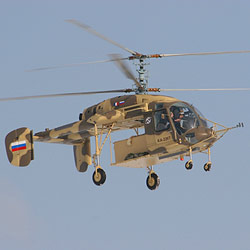
Russia to ‘Make in India’ 400 Helicopters a Year

Russia and India have agreed to assemble 400 twin-engined helicopters a year in India, Russian Deputy Prime Minister Dmitry Rogozin said after summit talks between President Vladimir Putin and Prime Minister Narendra Modi.
The Kamov Ka-226T, which Russia offered to assemble in India, is a light multi-role helicopter which is used for search-and-rescue operations.
The issue was discussed during the summit talks between Prime Minister Narendra Modi and Russian President Vladimir Putin.
7_img1121214090720
According to Russian Deputy Prime Minister Dmitry Rogozin, almost 400 Kamov helicopters a year will be assembled in India. He said Russia may consider producing Mi-17 transport helicopter in India as well.
At a joint media interaction with Putin, Modi said they discussed a broad range of new defence projects and how to align the defence relations to India’s own priorities, including ‘Make in India’.
“I am pleased that Russia has offered to fully manufacture in India one of its most advanced helicopters. It includes the possibility of exports from India. It can be used for both military and civilian use. We will follow up on this quickly,” Modi said.
The Prime Minister said Russia has been India’s foremost defence partner through decades and it will remain so.
“Even as India’s options have increased today, Russia will remain our most important defence partner. We have conducted joint exercises across all three wings of the Armed Forces in the last six months,” he said.
Russian officials said an in-principle decision was made on assembling of Russian helicopters in India.
“Almost 400 Kamov helicopters a year will be turned out,” Interfax news agency quoted Rogozin as saying.

Source : Defence News

Sunday, 5 October 2014

Geolocators to find stolen phones

Police To Buy Three Gadgets For Rs. 1.5Cr Each To Identify Precise Locations
The next time you lose a cellphone, chances of reclaiming it are higher.
Delhi Police has finally given the nod to its much-awaited project for buying devices equipped to trace mobile phones. Around 40 mobile phones go missing here every day on average, police data suggests.
The devices, termed Geolocators, will cost Rs 1.5 crore each—the department will reportedly procure three.
One each will go to the special cell and the crime branch, while the third may be allotted to the local police for specific cases.

TOI had first reported in September last year that cops were planning to procure devices which could help them find mobile phones. Sources confirmed that a global tender was floated last week to procure these machines. The gizmo will not only help cops trace loststolen or snatched phones but will also help in narrowing down on the suspects making ransom calls from a remote area. It will also help in tracking terrorists and criminals on the run, police said.
Geolocators, which use advanced GPS and “frequency locator” technology from Europe, come with an assembly unit and a handheld device. The latter is equipped with a smartphone and can be used to reach to the place where the target phone is located. The units can be mounted on a vehicle or packed in a haversack.
A source said the device would generate a “mobileterminating call or an SMS” to the phone from any given number—cops would even be able to speak to the target and engage or distract him—and then it will establish contact with the phone’s IMEI or IMSI’s frequency. A trained cop will go through the area with the handheld device to track down the target. The GPS-enabled unit will take him even to the room where the crimi nals or terrorists could be operating from or hiding and a cover team will follow to thwart them.
Till now, cops have been using the information furnished by the service provider, which directs them to a vague tower location (such as ITO or Pragati Maidan) which have hundreds of active numbers. Cops get to the tower ID and track the target or the phone using manual intelligence. This device—the handheld part of the unit acts as a guide—can take you up to 10 metres close to the target. It will, however, only be able to track GSM phones with 2G or 3G technology and can be upgraded to 4G as well.
Geolocators are an essential part of any police investigation unit in the West and are crucial in cases of homicides, kidnapping for ransom and robbery. The instrument is perceived to be a great help to the force.


Source: Defence News

Friday, 3 October 2014

US rules out trilateral military partnership with India, Japan

Washington: The US has ruled out a trilateral military partnership with India and Japan, days after it decided to upgrade its annual trilateral meetings at the ministerial level.


“No,” Assistant Secretary of State for South and Central Asia Nisha Desai Biswal told reporters when asked if the India-Japan-US trilateral diplomatic ties expand to become a military partnership.
“The trilateral relationship between India and Japan is not to be at the exclusion of any other relationships and partnerships in the region. It has its roots on the desire to support economic connectivity across the South Asia and Southeast Asia landscape,” she said.
“As you see the transition, the political transition in Myanmar, it has created a new opening and an opportunity to strengthen that connectivity that allows trade to go north, south, east, and west. So the trilateral conversations, have focused on how to do that, how to support trade and economic connectivity across the region,” she added.
There are also discussions about how to strengthen humanitarian assistance and disaster response across the region. There’s a great deal of capacity in India. There’s a great deal of capacity in Japan, she noted.
Asia is one of the most disaster-prone regions of the world. Over 60 per cent of hydro meteorological disasters that require international assistance occur in the Asia-Pacific region. So another area of discussion has been on creating capabilities and synergies on disaster response, she said.
She said there is a very deep interest in strengthening maritime cooperation and maritime security, and India is playing an increasing role in providing that as we look at anti-piracy initiatives and ways to create safe transportation routes and lanes for commerce to be able to take place.
“So those have been the nature of the conversations. This is an important trilateral, but I don’t think it comes at the exclusion of other strong, important relationships in the region,” she explained.
The US is currently doing joint military exercises with India and with Japan, she said, adding a lot of the countries of the region, including China, have participated in the RIMPAC exercises.
“We see these areas not as being exclusive or exclusionary, but we think that the more that we’re able to partner with and work with the militaries of the region, create understanding and capabilities of how we can work together, both in terms of responding to crises when they happen, but also in terms of creating shared understandings,” she said.
“I know that we have mil-to-mil conversations in our relationship with China, and we certainly do with many of the other countries of the region. These are conversations that we want to have across the broad expanse of all of our relationships,” she added.

Source: Defence News

Monday, 29 September 2014

Make in India : Honeywell, Tata Partner To Produce TALIN Systems

NEW DELHI — Coinciding with the visit by Indian Prime Minister Narendra Modi to the US Sept. 25-30, Honeywell International has inked a partnership agreement with India’s Tata Power to license-produce the tactical advanced land inertial navigator (TALIN) system.


“TALIN represents the latest in global positioning system (GPS)-free navigation and positioning technology, designed to improve asset safety and ultimately mission success,” said Arijit Ghosh, Honeywell president for aerospace in India, according to a statement released Sunday.
An executive of Tata Power said TALIN would be sold to the Indian Army for use in artillery systems and also sourced to the Honeywell supply chain worldwide.
TALIN systems are ideal for environments where GPS signals are not available, the Tata executive said, so they would find a ready market with the Indian Army.
Tata Power will license the design and hardware to assemble, test and build the production kits for the navigation system in India.
The Indian government wants to boost the domestic defense industry and the Tata-Honeywell partnership will help Indian industry get advanced technology, the Tata Power executive said.
Ghosh said, “By partnering with Tata Power SED on the production of TALIN we are aligning with the government’s aim of increasing locally manufactured technologies for India’s defense industry and giving the Indian armed forces an easy-to-justify option for navigation on the 21st century battlefield.”
Source : Defence News

Wednesday, 24 September 2014

Modi’s US visit : Defense partnership and Economic relations to remain top agenda

Defence and security partnership, energy including renewable energy relations and economic and investment ties and technology transfer will dominate Narendra Modi’s maiden visit to the USA as Prime Minister that is widely expected to correct sentiments in the India-US relations that have been soured since 2011.

On his longest trip abroad since taking over as the PM, Modi leaves for USA on September 25-26 for nearly seven days during which he will give his maiden speech at UN General Assembly on September 27 in New York and then proceed to Washington for the summit meeting with President Barack Obama on September 30.
All eyes are set on that meeting when Modi is also expected to raise concerns over US Immigration Bill that will affect Indian IT industry if passed in the current form. The Border Security, Economic Opportunity, and Immigration Modernization Act (S 744) imposes new and onerous restrictions and higher fees on H-1B and L1 visa programmes on the international IT services sector and would create an uneven playing field.
Modi’s visit is also expected to iron out bilateral differences over Intellectual Property Rights particularly in the pharmaceutical industry, official sources told ET. Big ticket items for the visit include expansion in the defence partnership to not only launch joint production of equipment but also sharing perspectives on West Asia and East and Southeast Asia, sources indicated.
Joint production and co-development that entails technology transfer is Modi’s mantra to attain self-sufficiency in the defence sector in the long run. India has deep interests over energy security and its diaspora in West Asia where Arab Spring followed by radical ISIS movement has been destablising factors. Meanwhile, China’s growing ambitions in East and Southeast Asia have been a matter of concern for both India and USA.
Among regional issues, situation in the Af-Pak region will dominate discussions, sources pointed out. India’s energy demands are rising by the day and Modi will make efforts to source more energy from Washington including partnership in solar energy and importing LNG and shale gas. There willfolbe considerable focus on clean energy partnership, an official said. While Modi would seek transfer of high-technology from the USA, the Obama administration would be keen to hear from him an environment conducive for investments after the policy paralysis in India since 2011, sources indicated.
US is interested in the agriculture and food processing sectors including coldchains. Besides, interest is growing in USA about investments in industrial parks or zones, and water purification, water management and energy from waste as part of smart city projects in India. “The US administration and senators are looking forward to a visit that will energise the relationship and expect that Prime Minister Modi could give them a confidence to further expand and deepen ties,” averred Robinder Sachdev, head of the India chapter of US India Political Action Committee, one of the influential India-American lobby groups said.
There are also indications US firm can invest in the Modi government’s campaign to Clean India. Education, especially community colleges by USA in India could be one of the deliverables from the visit. Modi and Obama will also discuss India’s nuclear liability law and ways to address concerns of US nuclear major Westinghouse.
Source : Defence NEws

Monday, 22 September 2014

France asks India to finalise joint missile project soon

NEW DELHI: France has asked India for early finalisation of the long-pending Rs 30,000-crore project for joint production of short-range surface-to-air missile (SR-SAM) systems.

In a letter, the French Defence Ministry has told its Indian counterpart that “it will carry out substantial transfer of technology and know-how, especially in the field of missile guidance”.
The French side has proposed that the project “would enable India to get in a few years in areas of strategic missile, the maximum autonomy you have called for”.
SR-SAM is proposed to be a joint venture between India and France and they have nominated the DRDO (Defence Research and Development Organisation) and a French multinational firm for the programme.
The deal has been under negotiations for over five years and has been awaiting final clearance after French President Francois Hollande and then Prime Minister Manmohan Singh in 2013 announced that talks have been concluded between both the sides on the missile development project.
The IAF had raised certain objections over the programme but the Defence Ministry has to take a final call on the programme after holding discussions with all stakeholders.
The French Defence Ministry said it wants to actively participate in new Indian government’s plans to achieve autonomy in field of military hardware production.
It has said that the missile programme would help in meeting India’s domestic market and can also be supplied to future export markets.
Source  : Defence News

Thursday, 18 September 2014

STATOISTICS

China started its economic reforms in the late 1970s. In 1980, China’s GDP–both in absolute and per capita terms in PPP dollars–was smaller than India. In 1984, the Chinese economy overtook us in terms of absolute value of output.
Interestingly, until 1991, the year when India started its economic reforms, India’s GDP per capita was higher than China’s. Since then, the gap between the two economies has only widened. Some experts believe that the economic reforms did not work that well in India because before opening its economy China managed to bring some level of social equality by doing land reforms and ensuring access to education to all section of society. Also its economy is growing at a faster rate while the population growth has stabilized

imggallery


Source : TOI

Monday, 8 September 2014

INDIA as a Great Power

UNLIKE many other Asian countries—and in stark contrast to neighbouring Pakistan—India has never been run by its generals. The upper ranks of the powerful civil service of the colonial Raj were largely Hindu, while Muslims were disproportionately represented in the army.
 
On gaining independence the Indian political elite, which had a strong pacifist bent, was determined to keep the generals in their place. In this it has happily succeeded.
But there have been costs. One is that India exhibits a striking lack of what might be called a strategic culture. It has fought a number of limited wars—one with China, which it lost, and several with Pakistan, which it mostly won, if not always convincingly—and it faces a range of threats, including jihadist terrorism and a persistent Maoist insurgency. Yet its political class shows little sign of knowing or caring how the country’s military clout should be deployed.
That clout is growing fast. For the past five years India has been the world’s largest importer of weapons (see chart). A deal for $12 billion or more to buy 126 Rafale fighters from France is slowly drawing towards completion. India has more active military personnel than any Asian country other than China, and its defence budget has risen to $46.8 billion. Today it is the world’s seventh-largest military spender; IHS Jane’s, a consultancy, reckons that by 2020 it will have overtaken Japan, France and Britain to come in fourth. It has a nuclear stockpile of 80 or more warheads to which it could easily add more, and ballistic missiles that can deliver some of them to any point in Pakistan. It has recently tested a missile with a range of 5,000km (3,100 miles), which would reach most of China.
Which way to face?
Apart from the always-vocal press and New Delhi’s lively think-tanks, India and its leaders show little interest in military or strategic issues. Strategic defence reviews like those that take place in America, Britain and France, informed by serving officers and civil servants but led by politicians, are unknown in India. The armed forces regard the Ministry of Defence as woefully ignorant on military matters, with few of the skills needed to provide support in areas such as logistics and procurement (they also resent its control over senior promotions). Civil servants pass through the ministry rather than making careers there. The Ministry of External Affairs, which should be crucial to informing the country’s strategic vision, is puny. Singapore, with a population of 5m, has a foreign service about the same size as India’s. China’s is eight times larger.
The main threats facing India are clear: an unstable, fading but dangerous Pakistan; a swaggering and intimidating China. One invokes feelings of superiority close to contempt, the other inferiority and envy. In terms of India’s regional status and future prospects as a “great power”, China matters most; but the vexatious relationship with Pakistan still dominates military thinking.
A recent attempt to thaw relations between the two countries is having some success. But tension along the “line of control” that separates the two sides in the absence of an agreed border in Kashmir can flare up at any time. To complicate things, China and Pakistan are close, and China is not above encouraging its grateful ally to be a thorn in India’s side. Pakistan also uses jihadist terrorists to conduct a proxy war against India “under its nuclear umbrella”, as exasperated Indians put it. The attack on India’s parliament in 2001 by Jaish-e-Mohammed, a terrorist group with close links to Pakistan’s intelligence service, brought the two countries to the brink of war. The memory of the 2008 commando raid on Mumbai by Lashkar-e-Taiba, another terrorist organisation, is still raw.
Pakistan’s nuclear capabilities are a constant concern. Its arsenal of warheads, developed with Chinese assistance, is at least as large as India’s and probably larger. It has missiles of mainly Chinese design that can reach most Indian cities and, unlike India, it does not have a “no first use” policy. Indeed, to offset the growing superiority of India’s conventional forces, it is developing nuclear weapons for the battlefield that may be placed under the control of commanders in the field.
Much bigger and richer, India has tended to win its wars with Pakistan. Its plans for doing so again, if it feels provoked, are worrying. For much of the past decade the army has been working on a doctrine known as “Cold Start” that would see rapid armoured thrusts into Pakistan with close air support. The idea is to inflict damage on Pakistan’s forces at a mere 72 hours’ notice, seizing territory quickly enough not to incur a nuclear response. At a tactical level, this assumes a capacity for high-tech combined-arms warfare that India may not possess. At the strategic level it supposes that Pakistan will hesitate before unleashing nukes, and it sits ill with the Indian tradition of strategic restraint. Civilian officials and politicians unconvincingly deny that Cold Start even exists.
Bharat Karnad of the Centre for Policy Research, a think-tank, believes Pakistan’s main danger to India is as a failed state, not a military adversary. He sees Cold Start as a “blind alley” which wastes military and financial resources that should be used to deter the “proto-hegemon”, China. Others agree. In 2009 A.K. Antony, the defence minister, told the armed forces that they should consider China rather than Pakistan the main threat to India’s security and deploy themselves accordingly. But not much happened. Mr Karnad sees feeble civilian strategic direction combining with the army’s innate conservatism to stop India doing what it needs to.
The “line of actual control” between China and India in Arunachal Pradesh, which the Chinese refer to as South Tibet, is not as tense as the one in Kashmir. Talks between the two countries aimed at resolving the border issue have been going on for ten years and 15 rounds. In official statements both sides stress that the dispute does not preclude partnership in pursuit of other goals.
But it is hard to ignore the pace of military investment on the Chinese side of the line. Brigadier Gurmeet Kanwal of the Centre for Land Warfare Studies points to the construction of new railways, 58,000km of all-weather roads, five air bases, supply hubs and communication posts. China would be able to strike with power and speed if it decided to seize the Indian-controlled territory which it claims as its own, says Mr Karnad. He thinks the Indian army, habituated to “passive-reactive” planning when it comes to the Chinese, has deprived itself of the means to mount a counter-offensive.
Unable to match Chinese might on land, an alternative could be to respond at sea. Such a riposte was floated in a semi-official strategy document called “Nonalignment 2.0”, promoted last year by some former national security advisers and blessed by the current one, Shivshankar Menon. India’s naval advantage might allow it, for example, to impede oil traffic heading for China through the Malacca Strait.
China and India are both rapidly developing their navies from coastal defence forces into instruments that can project power further afield; within this decade, they expect to have three operational carrier groups each. Some Indian strategists believe that, as China extends its reach into the Indian Ocean to safeguard its access to natural resources, the countries’ navies are as likely to clash as their armies.
An OCEAN needs a navy ::
China’s navy is expanding at a clip that India cannot match—by 2020 it is expected to have 73 major warships and 78 submarines, 12 of them nuclear—but India’s sailors are highly competent. They have been operating an aircraft-carrier since the 1960s, whereas China is only now getting into the game. India fears China’s development of facilities at ports in Pakistan, Sri Lanka, Bangladesh and Myanmar—a so-called “string of pearls” around the ocean that bears India’s name; Mr Antony called the announcement in February that a Chinese company would run the Pakistani port of Gwadar a “matter of concern”. China sees a threat in India’s developing naval relationships with Vietnam, South Korea, Japan and, most of all, America. India now conducts more naval exercises with America than with any other country.
India’s navy has experience, geography and some powerful friends on its side. However, it is still the poor relation to India’s other armed services, with only 19% of the defence budget compared with 25% for the air force and 50% for the army.
The air force also receives the lion’s share of the capital-equipment budget—double the amount given to the navy. It is buying the Rafales from France and upgrading its older, mainly Russian, fighters with new weapons and radars. A joint venture between Hindustan Aeronautics Limited (HAL) and Russia’s Sukhoi is developing a “fifth generation” strike fighter to rival America’s F-35. As well as indulging its pilots’ need for speed, though, the air force is placing a new emphasis on “enablers”. It is negotiating the purchase of six Airbus A330 military tankers and five new airborne early-warning and control aircraft. It has also addressed weaknesses in heavy lift by buying ten giant Boeing C-17 transports, with the prospect of more to come. Less clear is the priority the air force gives to the army’s requirements for close air support over its more traditional role of air defence, particularly after losing a squabble over who operates combat helicopters.
With the army training for a blitzkrieg against Pakistan and the navy preparing to confront Chinese blue-water adventurism, it is easy to get the impression that each service is planning for its own war without much thought to the requirements of the other two. Lip-service is paid to co-operation in planning, doctrine and operations, but this “jointness” is mostly aspirational. India lacks a chief of the defence staff of the kind most countries have. The government, ever-suspicious of the armed forces, appears not to want a single point of military advice. Nor do the service chiefs, jealous of their own autonomy.
The absence of a strategic culture and the distrust between civilian-run ministries and the armed forces has undermined military effectiveness in another way—by contributing to a procurement system even more dysfunctional than those of other countries. The defence industrial sector, dominated by the sprawling Defence Research and Development Organisation (DRDO), remains stuck in state control and the country’s protectionist past. According to a recent defence-ministry audit, only 29% of the products developed by the DRDO in the past 17 years have entered service with the armed forces. The organisation is a byword for late-arriving and expensive flops.
The cost of developing a heavy tank, the Arjun, exceeded the original estimates by 20 times. But according to Ajai Shukla, a former officer who now writes on defence for the Business Standard, the army wants to stick with its elderly Russian T-72s and newer T-90s, fearing that the Arjun, as well as being overweight, may be unreliable. A programme to build a light combat aircraft to replace the Mirages and MiG-21s of an earlier generation started more than quarter of a century ago. But the Tejas aircraft that resulted has still not entered service.
There are signs of slow change. These include interest in allowing partnerships between India’s small but growing private-sector defence firms and foreign companies, which should stimulate technology transfer. But the deal to buy the Rafale has hit difficulties because, though Dassault would prefer to team up with private-sector firms such as Tata and Reliance, the government wants it to work with stodgy HAL. Even if Dassault had a free choice of partners, though, it is not clear that Indian industry could handle the amount of work the contract seeks to set aside for it.
Richard Bitzinger, a former RAND Corporation analyst now at the S. Rajaratnam School of International Studies in Singapore, sums up the problem in a recent study for the Zurich-based International Relations and Security Network. If India does not stop coddling its existing state-run military-industrial complex, he says, it will never be capable of supplying its armed forces with the modern equipment they require. Without a concerted reform effort, a good part of the $200 billion India is due to spend on weaponry over the next 15 years looks likely to be wasted.
The Tiger and the Eagle ::
The money it will spend abroad also carries risks. Big foreign deals lend themselves to corruption. Investigations into accusations of bribery can delay delivery of urgently needed kit for years. The latest “scandal” of this sort surrounds a $750m order for helicopters from Italy’s Finmeccanica. The firm denies any wrongdoing, but the deal has been put on hold.
Britain, France, Israel and, above all, Russia (which still accounts for more than half of India’s military imports), look poised to be beneficiaries of the coming binge. America will get big contracts, too. But despite a ground-breaking civil nuclear deal in 2005 and the subsequent warming of relations, America is still regarded as a less politically reliable partner in Delhi. The distrust stems partly from previous arms embargoes, partly from America’s former closeness to Pakistan, partly from India’s concerns about being the junior partner in a relationship with the world’s pre-eminent superpower.
The dilemma over how close to get to America is particularly acute when it comes to China. America and India appear to share similar objectives. Neither wants the Indian Ocean to become a Chinese “lake”. But India does not want to provoke China into thinking that it is ganging up with America. And it worries that the complex relationship between America and China, while often scratchy, is of such vital importance that, in a crisis, America would dump India rather than face down China. An Indian navy ordered to close down China’s oil supplies would not be able to do so if its American friends were set against it.
India’s search for the status appropriate to its ever-increasing economic muscle remains faltering and uncertain. Its problems with Pakistan are not of the sort that can be solved militarily. Mr Karnad argues that India, from a position of strength, should build better relations with Pakistan through some unilateral gestures, for example cutting back the size of the armoured forces massed in the deserts of Rajasthan and withdrawing its short-range missiles. General Ashfaq Parvez Kayani, head of Pakistan’s army, has declared internal terrorism to be a greater danger to his country than India. That may also offer an opportunity.
China’s confidence in its new military power is unnerving to India. But if a condescending China in its pomp is galling, one in economic trouble or political turmoil and pandering to xenophobic popular opinion would be worse. Japan and South Korea have the reassurance of formal alliances with America. India does not. It is building new relationships with its neighbours to the east through military co-operation and trade deals. But it is reluctant to form or join more robust institutional security frameworks.
Instead of clear strategic thinking, India shuffles along, impeded by its caution and bureaucratic inertia. The symbol of these failings is India’s reluctance to reform a defence-industrial base that wastes huge amounts of money, supplies the armed forces with substandard kit and leaves the country dependent on foreigners for military modernisation.
Since independence India has got away with having a weak strategic culture. Its undersized military ambitions have kept it out of most scrapes and allowed it to concentrate on other things instead. But as China bulks up, India’s strategic shortcomings are becoming a liability. And they are an obstacle to India’s dreams of becoming a true 21st-century power.
Source : Defence News

Thursday, 4 September 2014

US endorses India-Japan strategic partnership

WASHINGTON: The US has welcomed the just announced India-Japan Strategic Partnership and said it is looking forward to strengthen its trilateral co-operation with them.

“The US strongly supports India’s collaboration and cooperation with its neighbours in the Asia Pacific. We actively support such collaboration through our trilateral dialogue and other activities with India and Japan, and look forward to strengthening further our trilateral cooperation,” State Department spokesperson Jen Psaki said. 
The US strongly supports a prosperous India playing an important role on the global stage, she said.
It is during the Obama Administration that India, Japan and the US have started trilateral meetings. 
“As we have long said, a strong, prosperous India contributes to regional and global peace and prosperity,” Psaki said responding to questions about Prime Minister Narendra Modi’s visit to Japan this week.
During a meeting between Modi and his Japanese counterpart Shinzo Abe, the two sides announced India-Japan strategic partnership and deepening of defence relationship. 
The Pentagon welcomed the decision of India and Japan and said that the latter’s participation in the Malabar exercise would be routine.
“We are very excited that Japan’s participation in Exercise Malabar is becoming routine and believe that credible, ready, and inter-operable maritime forces help to preserve peace, prevent conflict, and foster a spirit of cooperation to meet regional and global challenges for mutual benefit,” Jeffrey S Pool, a Defence Department spokesperson said. 
American think-tank community has described Modi’s Japan visit a great success.
“Modi’s visit to Japan has been lauded by all corners as a great success,” said Alyssa Ayres, Senior Fellow for India, Pakistan, and South Asia at the Council on Foreign Relations, a top American think-tank. 
“The United States has strongly supported strengthened ties between India and Japan (the US-India-Japan trilateral just one example), and the deliverables announced in the Tokyo Declaration complement components of US-India relations,” Ayres said.
The joint emphasis on democracy, upgraded defence relations, science and technology, and a robust catalogue of economic undertakings all illustrate similarity with priorities in the US-India relationship, she said. 
One major difference lies in the Japanese government’s ability to mobilise large amounts of Overseas Development Assistance, particularly through soft loans, she added.
“The Tokyo Declaration puts Prime Minister Abe’s commitment at 3.5 trillion yen over five years (around USD USD 33 billion). That’s a much larger sum than the United States government typically mobilises, and at a time when the US Congress has not renewed the US ExIm Bank’s charter, shows where Washington has a diminished ability to support similar projects,” Ayres said.
“Countries like Japan are working with economic policy tools to meet the strategic interests of partners like India, especially on infrastructure. Some good lessons for us here,” she said.
Writing for “Asia Unbound” a CFR foreign policy blog, Sheila A Smith wrote that in his five-day visit this week, Narendra Modi has made Japan’s pivot to India even more enticing – and far more likely to succeed. 
Modi’s election in May has brought more energy to the relationship, she noted.
“As the television footage suggested, the two leaders seem to have a good chemistry, and enjoyed their time together. Modi even sent out messages of thanks to Abe via social media as he visited Kyoto and other spots in Japan,” Smith said. 
Abe, according to her, must be satisfied to see one of his main diplomatic efforts take root.
He has put considerable energy into developing new partners and opportunities for balancing China’s rise, and India has long been an option that Tokyo’s strategic thinkers have looked to develop, she observed.
Source: Defense News

Tuesday, 2 September 2014

India, Japan agree to strengthen defense ties

In his first state visit, Indian Prime Minister Narendra Modi has met with a kindred spirit, Japanese Premier Shinzo Abe. The two leaders, wary of China's glowing clout in Asia, have agreed to strengthen defense ties.
India, Narendra Modi, Japan Shinzo Abe, visit 1.9.
semco tech services
During his visit to Japan on Monday, Indian Prime Minister Modi warned Asian powers against territorial expansionism, in a veiled reference to China's ambitions in the region.
"The 18th century situation of expansionism is now visible," Modi said, after holding talks with Japanese Prime Minister Shinzo Abe in the historic city of Kyoto. "Such expansionism would never benefit humanity in the 21st century."
Modi didn't specifically mention Beijing, but China and India contest several regions along their common border. Abe shares Modi's suspicion of China's intentions in the region. Beijing and Tokyo dispute the Senkaku Islands, called the Diaoyu in Chinese.
Over the summer, Prime Minister Abe's Cabinet approved a reinterpretation of Japan's pacifist constitution, permitting Tokyo to defend allies and deploy troops abroad for combat missions.
'Strategic, global partnership'
Although Abe and Modi failed to set up a permanent forum for their foreign and defense ministers to hold regular consultations, they did agree to "upgrade and strengthen" their defense ties. Tokyo is keen to sell New Delhi US-2 amphibian aircraft. The two countries also agreed to participate in joint maritime drills, and for Japan to continue participating in US-India drills.
"Together, working hand-in-hand with Prime Minister Modi, I intend to fundamentally strengthen our relationship in every field to elevate our relationship to a special strategic and global partnership," Prime Minister Abe said.
The two leaders also agreed to double Japan's investment in India over the course of five years to a total of 3.5 trillion yen ($33.6 billion, 25.5 billion euros).
slk/kms (AFP, dpa, Reuters)
Source : http://www.dw.de/ 

Monday, 1 September 2014

For First Time Since World War 2, Japan Will Sell Military Equipment. To India

TOKYO:  During his visit to Japan, Prime Minister Narendra Modi may not have closed a deal on nuclear energy cooperation, but he is returning with a pledge from counterpart Shinzo Abe for nearly 34 billion dollars in investment over the next five years, and the  sale of an amphibious aircraft to India's navy. The deal marks the intent of Asia's second and third largest economies to counter an increasingly aggressive China. 

For First Time Since World War 2, Japan Will Sell Military Equipment. To India


The specialised sea-plane, the US-2, will be Japan's first overseas military sale in nearly 50 years. Because it provides landings on sea and land, the plane will significantly enhance the Indian Navy's ability to carry out, casualty evacuations, deliver humanitarian assistance and conduct long-range surveillance and reconnaissance.


In keeping with Mr Modi's emphasis on developing military technology indigenously to check India's dependence on foreign defence manufacturers, the US-2 planes will be made in India. The Indian Navy has been lobbying to get 15 of these.


A statement issued in Tokyo after Monday's summit between Prime Ministers Modi and Abe said "both sides directed the Joint Working Group to accelerate progress in the discussions and preparations for a road map for the development of the Indian aircraft industry through US-2 amphibian aircraft cooperation including the transfer of the aircraft and its technology to India." 


This is the first time since World War-II ended seven decades ago that Japan will be selling military hardware abroad. Following its defeat, Japan had imposed an embargo on sale of weapons and military equipment.


The four-engine US-2 aircraft will act as a force multiplier for the Indian Navy, allowing it to quickly insert troops at places where there is no landing strip on shore, including the numerous far-flung islands in Andaman and Nicobar and Lakshwadeep. 


Currently, ground troops are delivered to areas like this using a 'Landing Ship Tank' which isn't always effective. The Sea Planes will allow faster troop insertion of small clusters of soldiers for specialised operations.


India's coastline runs nearly 7,500 kilometres and the Navy had earlier projected a requirement of 15 such sea planes, but their acquisition was stalled by a shortage of funds and other competing requirements, seen as more urgent - like acquiring multi-role helicopters, torpedoes, submarines and ships. 


The US-2 is one sturdiest aircrafts and can operate in sea state 5 conditions (wind speed of 30 to 38 km per hour) on the high seas as well as on rivers and lakes. Each plane can carry about 30 personnel and lift 18 tonnes and fly 4,500 km at stretch without needing to stop for refuelling. 
Story First Published: September 01, 2014 21:30 IST
Source: NDTV

Wednesday, 27 August 2014

Indian Defense Ministry to decide fate of Rs 6,000 cr light helicopter deal

New Delhi: The Defence Ministry will decide the fate of the controversial Rs 6,000 crore deal to procure 197 light choppers which has been on hold due to an ongoing CBI probe into charges that a Brigadier had sought bribe from AgustaWestland to help it bag the contract.
 
During a meeting of the Defence Acquisition Council (DAC) scheduled this week, the Defence Ministry will also discuss deals worth around Rs 15,000 crore for procuring Apache attack helicopters and Chinook heavylift choppers for the IAF from the US, Defence Ministry officials said.
The DAC, headed by Defence Minister Arun Jaitley, is scheduled to take up the deal for discussion in its meeting where it is expected to decide its fate, they said.
The 197 light utility choppers are to be procured for the Army and the IAF who use them for ferrying troops and supplies in high altitude areas such as Siachen Glacier and would be used to replace the vintage Cheetah/Chetak choppers which were inducted 40 years ago.
CBI has been probing allegations against the Brigadier which surfaced during investigations into the VVIP chopper deal about the alleged involvement of AgustaWestland in paying kickbacks to secure the Indian contract for 12 VVIP choppers.
CBI probe was ordered by the Defence Ministry after the Army requested it to investigate the charges against the Brigadier before taking any decision on the future developments in the deal.
Allegations have been levelled against the Brigadier in a letter allegedly sent by an AgustaWestland official in India to his superiors in Italy saying the officer was seeking USD 5 million for facilitating the deal in their favour.
Only two firms European Eurocopter and Russian Kamov are left in the race for the deal to supply 197 light choppers to the Army and the IAF as AgustaWestland was knocked out of the deal in the preliminary stages itself.
The deal for procuring 197 light choppers has already been cancelled once in 2007 in the last stages. The Brigadier has denied the charges made against him.


Source : Zee News

Thursday, 21 August 2014

Indian firms tool up for defence orders on Modi’s ‘buy India’ pledge

(Reuters) – Some of India’s biggest companies are pouring billions of dollars into manufacturing guns, ships and tanks for the country’s military, buoyed by the new government’s commitment to upgrade its armed forces using domestic factories.
 
India, the world’s largest arms importer, will spend $250 billion in the next decade on kit, analysts estimate, to upgrade its Soviet-era military and narrow the gap with China, which spends $120 billion a year on defence.
Under the last government, procurement delays and a spate of operational accidents – especially dogging the navy – raised uncomfortable questions over whether India’s armed forces are capable of defending its sea lanes and borders.
Even before his landslide election victory in May, Prime Minister Narendra Modi promised to assert India’s military prowess and meet the security challenge posed by a rising China and long-running tensions with Pakistan.
Within weeks of becoming prime minister, he boosted defence spending by 12 percent to around $37 billion for the current fiscal year and approved plans to allow more foreign investment into local industry to jump-start production.
Launching a new, Indian-built naval destroyer last week, Modi said: “My government has taken important steps in improving indigenous defence technology … We can guarantee peace if our military is modernised.”
This build-up comes as Southeast Asian nations expand their own defence industries, spurred by tensions with China. India, reliant on a state defence industry that often delivers late and over budget, risks being caught flat-footed.
“The opportunity is huge,” said M.V. Kotwal, president (Heavy Engineering) at Larsen and Toubro Ltd, one of India’s biggest industrial houses.
“We really expect quicker implementation. There are signs that this government is very keen to grow indigenisation,” added Kotwal, referring to increasing domestic production.
Tata Sons, a $100 billion conglomerate, said last month it will invest $35 billion in the next three years to expand into new areas with a focus on a handful of sectors including defence.
Larsen is putting $400 million into a yard to build ships for the navy, while Mumbai-based Mahindra Group is expanding a facility that makes parts for planes, including for the air force, and investing in armoured vehicle and radar production.
The companies are being lured by the prospect of lucrative returns on their investments as the Modi government has pledged to make “buy Indian” the default option for future orders.
Larsen is targeting a fourfold increase in annual defence revenue to $1 billion within the next five years.
Critics of indigenisation argue that producing gear – especially in the lumbering state sector – is more costly than buying from abroad. Such deals can add layers of bureaucracy, increasing risks of corrupt dealings.
Indian industry is renowned for its ability to adapt, yet questions remain whether the private sector can come up with the solutions needed to bring armed forces into the 21st century without sufficient access to world-class foreign technology.
DELAYS
Some companies are also sceptical of the government’s commitment to grow the private market given New Delhi’s history of delays and order cancellations, and the traditionally strong ties between the military and state-run manufacturers.
They cite the case of a $10 billion Future Infantry Combat Vehicle (FICV) programme. Conceived in 2009, the defence ministry invited three private players and the Ordnance Factory Board, a state entity, to bid for the 2,600-vehicle contract but suddenly withdrew the letter of intent in 2012.
Bidders included Mahindra and Tata, which is developing a vehicle along with Lockheed Martin Corp and General Dynamics Corp that could compete for a future contract, said Rahul Gajare, an analyst at Edelweiss Securities.
A quick decision to relaunch the programme would demonstrate Modi’s resolve, said S.P. Shukla, who heads Mahindra’s defence business. Past tenders have stalled amid wrangling over whether or not to allow state manufacturers to bid and under what terms.
Larsen’s Kotwal said its Kattupalli shipyard in south India has yet to receive any orders for warships or submarines despite being designed to do just that and despite past government pledges to build at least two submarines in private yards.
In the meantime, the yard has switched to constructing and repairing commercial vessels.
“The policy in India has been right since 2006. The problem has been implementation,” said Rahul Chaudhry, CEO at Tata Power SED, which makes rocket launchers, sensors and radars.
Local firms have captured a fraction of the Indian defence market since it first opened to private participation in 2001. Consecutive governments have handed orders to state factories or to foreign giants like Boeing, Lockheed and BAE Systems.
Gajare at Edelweiss estimates total India private sector revenues from defence, including overseas orders, at below $2 billion last year, less than 6 percent of the country’s defence spending.
 
Source :Defence News

Monday, 18 August 2014

Rafale fighter jet deal contract with France almost ready: Defence ministry

The much-awaited multi-billion Rafale combat aircraft deal with France has moved a step further with the defence ministry finalizing a ‘draft contract’, according to top defence ministry officials.
 
Rafale was declared the lowest bidder in Janaury 2012 but the deal has not been inked so far on account of escalation in the cost. The Cost Negotiation Committee, which was set up in February 2012 to work out the modalities for the deal has not reached a conclusion after 30 months of negotiations.
The government raised its concerns over this last month, during the visit of French foreign minister Laurent Fabius to New Delhi.
“Yes, we are in the process of finalizing the draft contract for the deal. And we also expect the Cost Negotiation Committee to submit its report soon,” said a senior defence ministry official, who was privy to the developments.
But the official refused to give a time frame for inking the deal. “It is very difficult to predict any date for signing the contract. But, it should happen in the next few months,” the officer said, requesting anonymity.
The Indian Air Force (IAF), which is coping with a depleted combat strength, claims that even if the deal is signed by the end of the year the first lot of Rafale aircraft would arrive only by 2017, by which time the IAF would have to phase out its MiG-21 squadrons.
The likelihood of an early signing is encouraging. Besides, the ruling NDA government has promised to address all the needs of the armed forces to ensure defence preparedness.
According to officials privy to the development, the defence ministry has asked representatives of M/s Dassault Aviation – the French manufacturer of Rafale aircraft – to revise the price structure which has gone beyond expected estimates.
Officials claim that when the tender was floated in 2007 the cost of the programme was $12 billion (Rs42,000 crore).When the lowest bidder was declared in January 2012, the cost of the deal shot up to $18 billion (Rs90,000 crore). Now with the inclusion of transfer of technology, the life cycle cost and creation of an assembly line, the deal has climbed to a whopping $20 billion.
The air force is seeking to replace its aging MiG-21s with a modern fighter and the medium multi-role combat aircraft (MMRCA) fits between India’s high-end Sukhoi-30MKIs and the low-end Tejas LCA lightweight fighter. The IAF has a sanctioned strength of 45 fighter jet squadrons. However, only 30 squadrons are operational as old aircraft have been retired.
Eighteen of the 126 new aircraft are to be purchased directly from Dassault and Hindustan Aeronautics Limited will manufacture 108 under a licence, at a new facility in Bangalore.
Defence minister Arun Jaitley informed parliament last week that “given the complexity of the procurement case, the process of negotiations with Dassault Aviation on various aspects of the commercial proposal and provisions of draft contract is on.”
Dassault Aviation emerged as L-1 bidder for procurement of the MMRCA based on its quotation.
 
Source : Defence NEws

Saturday, 16 August 2014

Indian defence modernisation plan needs pragmatic action

The Army’s war waging capability is increasingly handicapped. Concerned with dwindling operational preparedness and operationally hard pressed, it wants to induct advanced technology hardware that it perceives would serve its operational needs optimally.
 
The NDA government has identified defence reforms and building a self sustaining defence industrial base as a priority reform sector. To transform this into reality, it is not so much of the government commitment but its ability to take policy decisions and put processes in place by spurring public and private sector investments through higher indigenisation, transfer of technology, simplifying procedures, etc.
The Army’s war waging capability is increasingly handicapped. Concerned with dwindling operational preparedness and operationally hard pressed, it wants to induct advanced technology hardware that it perceives would serve its operational needs optimally.
However its efforts at modernising be it combat or combat support arms are hardly encouraging – plagued by procurement and indigenous production delays and lack of timely planning.
The Parliamentary Standing Committee on Defence’s figures reveals that the army’s equipment modernisation is steadily falling. In 2008-09, the army spent 27 paisa of every rupee on capital expenditure. This fell to 24 paisa in 2009-10; 23 paisa in 2010-11; 20 paisa in 2012-13 and just 18 paisa in the last two years.
Indian army’s mechanised fleet comprises T-72 and T72 M1s Main Battle Tanks (MBTs), T-90S MBTs and indigenously produced Arjun MKI tanks. The main issue facing operational efficiency of mechanised forces are two: night fighting capability and ammunition.
Resultantly the army’s ambitious plans to transform from a ‘threat-based to a capability force’ by 2020 are being consistently thwarted as a result of process driven MoD breaucracy and the Army headquarters delays in drawing up credible qualitative requirements.
Army’s Modernization Perspective ::
Let us take the armour first. Indian army’s mechanised fleet comprises T-72 and T72 M1s Main Battle Tanks (MBTs), T-90S MBTs and indigenously produced Arjun MKI tanks. The main issue facing operational efficiency of mechanised forces are two: night fighting capability and ammunition.
In so far as night fighting capability is concerned only the 650-odd Russian T90S MBTs along with indigenously designed Arjun MKI tanks have full solution night fighting capability. T-72 and T72M1s that form the backbone of 59-odd armour regiments along with some 2200 Soviet-designed BMP-II infantry combat vehicles (ICVs) lack night fighting capability. Majority of the T72s await upgrades that will provide them with either full solution thermal imaging fire control systems (TIFCS) or third generation partial solution thermal imaging stand alone systems (TISAS) enabling all weather including night operations. Till date only 620 partial solution TISAS have been acquired.
In terms of armour ammunition there is critical deficiency of anti tank ammunition; 125 mm armour piercing fin-stabilised discarding sabot (APFSDS). Indigenous production is held up on account of black listing of Israeli company, resultantly availability of 125 mm APFSDS including war wastage reserves have dropped to critical levels necessitating urgent imports of around 66,000 rounds from Russia at highly inflated prices.
Next major deficiency is that of Artillery, where no new gun has been inducted in last three decades. Despite years of attempts at modernisation; army’s artillery profile remains beseeched by the inability to decide on the 155 mm gun to replace the 180-odd field artillery regiments employing as many as six different calibres that are fast approaching obsolescence. Even the 32 artillery regiments equipped with 410 FH-77B 155 mm Bofors guns imported in the late 1980s-are reduced to half following cannibalization owing to the non-availability of spares. Upgradation of approximately 200 Soviet 130 mm M-46 carried out jointly by the Ordnance Factory Board and Soltam of Israel has been unsatisfactory resulting in CBI enquiry.
The proposal under the Artillery Rationalisation Plan to acquire by 2020-25 a mix of around 3000-3600; 155mm/39 calibre light weight and 155mm/52 calibre towed, mounted, self-propelled (tracked and wheeled) and ultra light weight 155mm/39 calibre howitzers through imports and local, licensed manufacture have been continually postponed for over a decade. Tenders for almost all these guns have been issued, withdrawn and re-issued, along with several rounds of inconclusive trials. Matters have been further complicated by the MoD completely or partially blacklisting at least four top overseas howitzer manufacturers.
The infantry’s F-INSAS (Future Infantry Soldier as a System) project that includes a fully networked, all-terrain, all-weather personal equipment platform as well as enhanced firepower and mobility for the digitalised battlefield of the future continues to be abnormally behind schedule. Similarly eight-odd Special Forces battalions face an identity crisis, operating without a specialised operational mandate, organisational support or “dedicated budget” resulting in piecemeal and incomplete weapon and equipment packages.
Adding to the Infantry’s woes is the shortages of credible assault rifles (ARs), carbines, ballistic helmets, lightweight bullet proof jackets and night vision devices. These are largely produced indigenously. Last year the MoD issued a global tender for 66,000, 5.56 mm ARs for an estimated $ 700 million to replace the locally designed Indian Small Arms System (INSAS). The eventual requirement for the proposed AR is expected to be around 2 million units for use not only by the army but also the paramilitary forces and the numerous provincial police forces in a project estimated to cost around $3 billion.
Other infantry shortages include; close quarter battle carbines, general purpose machine guns, light-weight anti-materiel rifles, mine protected vehicles, snow scooters for use at heights above 21,000 feet in Siachen, 390,000 ballistic helmets, over 30,000 third generation NVDs, 180,000 lightweight bullet proof jackets together with other assorted ordnance including new generation grenades.
Similar is the story of air defence. The bulk of the army’s air defence guns – Bofors L 70s and the Soviet Zu-23-2s and ZUS-23-4s and missiles like the Russian OSA-AK and Kradvat – date back 30-40 years and need replacing. The Army Aviation also faces similar shortages. There is an urgent need to replace obsolete aviation assets like the Chetak and Cheetah helicopters. Acquisition of 197 helicopters under the Army Aviation Corps Vision 2017 was postponed after the procurement of Eurocopter AS 550 C3 Fennec was scrapped in November 2007. Four years later after trials, evaluation and negotiation the contract is under re-assessment featuring Russia’s Kamov 226 and Eurocopter’s AS 550 models, with little chance of early conclusion.
Addressing Army’s Modernization Needs ::
The major issue that emerges is how will the army get out of the vicious cycle of delays in procurement, and get its modernisation plans back on track. Is it feasible to undertake an all encompassing procurement backed by indigenous production taking the transfer of technology (TOT) route? What are the likely constraints?
Let us take a look at the budgetary support first? The Defence Budget for 2014-15 has an allocation of Rs. 2, 29,000 crores ($38 billion) an increase of 12 per cent over the previous year’s allocation. The capital outlay is Rs.94, 588 crores ($15.7 billion), and the remaining allocation of Rs. 1, 34,412 crores is the revenue outlay. The sub allocation of capital outlay to Army is Rs. 20, 655 crores, Navy Rs. 22, 312 crores, Air force Rs. 31,818 crores, DRDO Rs.9298 crores and modernization of Ordnance Factories (OFs) Rs. 1, 207 crores. While the figures might look impressive it needs to be noted that fairly large amount of capital outlays get consumed by committed liabilities leaving fairly modest amounts for new procurements.
Second, even if the money was available how can the army make up such huge shortages in any acceptable time frame? Procurement procedures, deciding on vendors for transfer of technology, issues regarding off sets, participation of the private sector and above all skill development are long drawn process which in the best case can take anything from 5 to 7 years.
To deal with the problem two critical aspects need to be addressed: One, the nature of future threats both in short-and-medium-to-long-terms basis. If the trigger for conflicts is likely to be unacceptable provocation requiring immediate military response; this requires basic level of preparedness and modernization to deal with such contingencies. Two, the long-term capability needs require a more nuanced and detailed induction perspective more attuned to R&D, technology transfers and indigenous production, etc. The essential take away from the above analysis is two-fold – laying down induction priorities and tri service synergy.
[Author Brigadier (Retd.) Arun Sahgal, PhD, is Deputy Director Research and Head, Centre for Strategic Studies and Simulation, at the United Service Institution of India. He is a member of National Task Force on Net Assessment and Simulation, under the NSCS, Government of India.]
 
Source : Defence News

Tuesday, 12 August 2014

Why is India offering to buy more US helicopters

(Reuters) – India has offered to significantly increase an order for U.S. attack helicopters, Indian officials said, as U.S. Defense Secretary Chuck Hagel began a visit to New Delhi on Thursday aimed at boosting defence and strategic ties.
 
The Apache gunships and a deal for Chinook helicopters, both built by Boeing, will top the agenda in Hagel’s talks on Friday with the new administration led by Prime Minister Narendra Modi.
India has offered a follow-on order of 39 AH-64D Apache helicopters in addition to the 22 now being negotiated, a Defence Ministry official said. The sides have been wrangling over the price of the gunships, however, with the initial deal having been estimated to be worth $1.4 billion.
The two countries have rapidly expanded military and business ties in recent years, despite discord over issues such as intellectual property rights and market access.
Washington is keen to step up cooperation across the board, seeing India as a strategic partner in the face of an increasingly powerful and assertive China.
According to defence research firm IHS Jane’s, India was the top foreign buyer of U.S. arms last year. An Apache deal would be the first big military contract since Modi’s government took office in May.
Hagel’s trip follows one by U.S. Secretary of State John Kerry last week and is part of the build-up to talks between Modi and President Barack Obama in Washington in September.
Hagel’s talks will also cover military exercises and co-production and co-development of armaments and the renewal of a 10-year defence cooperation agreement that runs until 2015.
Hagel said the purpose of his visit went beyond arms sales.
“Our interests are varied and common – stability, security, economics, possibilities, freedom,” he said en route to India. “I’ll be there, working, yes, our specific issues, but it’s larger … than that.”
“WE NEED PARTNERS”
Hagel said Asia-Pacific was a region of great opportunities, but also of challenges. “We need partners. We need relationships. That’s the kind of world we live in, and that’s the kind of world that we’re going to be living in.”
Speaking to reporters on his plane, Hagel was asked about India’s apparent reluctance to be seen as a full U.S. ally and he replied that Washington was “mindful” of India’s tradition as a independent, non-aligned state.
“We’re not trying to change that,” he said. “But…we have common interests, and…we think there’s more potential to build on those common interests.”
U.S. officials say there is the potential for billions of dollars of new arms sales in the next few years and hope Modi can overcome bureaucratic obstacles that have held up some.
Last month, India’s cabinet cleared a proposal to allow 49 percent foreign participation in the defence industry, up from a current cap of 26 percent.
Hagel said he would be looking at whether there would be the potential to go beyond 49 per cent something U.S. defence firms want before allowing technology transfers India craves.
The initial batch of Apache helicopters is meant to replace the Indian Air Force’s ageing fleet of Soviet-era aircraft and will be armed with Hellfire and Stinger missiles.
The Indian Army has separately requested a fleet of at least 39 of these attack aircraft, some of which will be deployed as part of a new mountain division it is raising along the disputed border with China, an army official said.
“The point is we are looking at 60 to 70 pieces eventually, so the expectation is the vendor will factor that in, in the price negotiations,” said the defence ministry official, who asked not to be identified in line with ministry policy.
U.S. defence sales to India have grown from the low hundreds of millions of dollars in the decade to 2008 to more than $9 billion since that year.
 
Source : defencenews.in

Saturday, 9 August 2014

FDI in defence may go up to 100% if CEO is Indian

Global defence equipment majors such as BAE Systems and Lockheed Martin could set up manufacturing units in India and bring in foreign direct investment (FDI) exceeding 49 per cent, provided the company’s chief executive officer (CEO) is Indian.
As the objective was to let only serious players enter the market, the defence FDI policy approved by the Cabinet on Wednesday categorically stated investee companies should be self-sufficient in product designing and have maintenance and life cycle support facilities for the products they manufactured here, said a senior department of industrial policy and promotion (DIPP) official.
The Union Cabinet had approved an increase in the composite foreign investment cap in the defence sector from 26 per cent to 49 per cent. For investment exceeding 49 per cent, the Cabinet Committee on Security (CCS) will clear applications on a case-by-case basis.
“It could go up from 49 to 100 per cent, depending on modern and state-of-the-art technology, with the approval of the CCS,” said the DIPP official.
The CCS might consider such proposals only in rare cases in which original equipment manufacturers such as BAE Systems, Lockheed Martin, Airbus Group and Sikorsky intend to set up manufacturing units here.
This is aimed at ensuring only top defence original equipment manufacturers, with robust and proven track records, enter the market, with large-scale investment proposals. The government is hopeful this will not only lead to more manufacturing facilities in the country, but also ensure the life cycle of products is catered to by foreign companies.
The CCS will see to it that the management and control remains with Indian companies in case the FDI exceeds 49 per cent, more so in case it is more than 51 per cent, on a case-by-case basis. The official said in these cases, the CEO had to be Indian.
However, experts say subjective norms such as modern and state-of-the-art technology, self-sufficiency in product designing and maintenance and life cycle facilities will be hurdles to attracting FDI.
Amber Dubey, partner and head of aerospace and defence, KPMG in India, said, “Subjective conditions such as local design, maintenance repair and overhaul, lifecycle support facility and state-of-the-art technology run the risk of interpretation, delays, misuse and litigation. Once an original equipment manufacturer wins a competitive tender, market forces will force these to be transferred to India in stages.” 
Putting onerous preconditions ended up discouraging serious investors, Dubey said, adding the government could, instead, bring in practical checks and balances that would help build a strong defence industrial base in India through 10-15 years. 
“The CEO has to be an Indian national by default, from the perspective of national security and individual accountability. It would be practically difficult to get a CEO of foreign nationality extradited to India and prosecuted in case of an adverse event,” he said. 
Officials said all foreign institutional investment up to 24 per cent would be allowed under the automatic route. The DIPP official said proposals related to FDI exceeding 26 per cent would be approved on a case-to-case basis, apparently due to “national security concerns, as it (defence) is a highly sensitive sector”. 
Since the Indian defence sector was opened to private companies in 2001, barely $5 million of FDI has flowed into it, according to official statistics.
Nayanima Basu in New Delhi

Source:

Thursday, 7 August 2014

US eyes big-ticket arms deals during Hagel’s visit

With US Defense Secretary Chuck Hagel set to visit India tomorrow, noted American experts said his maiden trip to the country, in the early days of the new government, will give a much-needed thrust to the Indo-US defense ties.
Hagel, the second US cabinet minister to meet Prime Minister Narendra Modi, this week, will be accompanied by a high-power delegation of military leadership.
The Defense Secretary, during his three-day visit will hold talks with Defence Minister Arun Jaitley, and is also expected to meet National Security Advisor Ajit K Doval and External Affairs Minister Sushma Swaraj.“The purpose of this trip is to nurture the relationship and not to ink any deal,” Pentagon Press Secretary, Rear Admiral John Kirby told PTI ahead of the trip.
Hagel’s meetings will focus on the converging interests of India and the US in the Asia Pacific, their common interests in Afghanistan and initiatives to strengthen bilateral defense cooperation, including military exercises, defense, trade, co-production and co-development, and research and new technologies, Kirby said.
Assistant Secretary of State for Political Military Affairs, Puneet Talwar will also accompany Hagel.
“Bilateral defence ties are stronger than they have ever been, and poised to deepen further,” said Alyssa Ayres, senior fellow for India, Pakistan, and South Asia at the Council on Foreign Relation.
“On matters of strategy, a high-fidelity conversation between Hagel and Jaitley about regional security will build confidence between the two new counterparts,” Ayres said.
According to Richard M Rossow, Wadhwani Chair in US India Policy Studies, at the Center for Strategic and International Studies, India US defense ties have been the ballast for the relationship in the last year.
“Losing the MMRCA bid was painful, but the Department of Defense rebounded quickly, launching the Defense Trade Technology Initiative (DTTI). Defense sales by American firms are increasing, and joint exercises – highlighted by the recent Exercise Malabar,” he said.
“Anything really big that is close to ready for announcement would typically be held for when the two heads of state meet in September,” Rossow said. 
Source: Defencenews

Indian Union cabinet approves FDI in defence, railways

The Union Cabinet on Wednesday approved a proposal to raise the cap on Foreign Direct Investment (FDI) in the defence sector from 26% to 49%, a move aimed at accelerating indigenisation and bringing in modern technologies to meet the requirements of the armed forces.
Finance minister Arun Jaitley had announced in his budget speech that the FDI cap in defence manufacturing would be increased to 49%, with full Indian management and control through the Foreign Investment Promotion Board (FIPB) route.
Foreign firms haven’t made significant investments or set up defence manufacturing facilities, with the 26% cap on FDI dampening their enthusiasm to pump money into the country.
Barely $5 million of FDI has flowed into India since the defence sector was thrown open to private companies in 2001 by then NDA government.
However, it remains to be seen if lifting the FDI cap to 49% would lead to a significant inflow of foreign investment into the country and lead to greater indigenisation as there are some who have been advocating raising the limit to 74%.
Former defence minister AK Antony had opposed lifting the 26% cap on FDI. He had attacked the NDA government last month for increasing the FDI cap to 49% in the Budget, saying that it would hurt national security.
He had said, “I know a very strong lobby is working. Their demand is 100% FDI in defence. Successive governments since 1991 have overcome such pressure tactics. Their decision not to grant FDI beyond 26% was well thought out.”
However, the commerce ministry under the UPA regime had batted for raising the FDI cap to 74% to encourage foreign firms to invest in India.
100% FDI in railways
The government also approved a proposal to allow 100% foreign direct investment (FDI) for building railways infrastructure. Foreign capital in railways was not allowed till now.
However, the new government led by Prime Minister Narendra Modi has been pushing for it to build infrastructure projects such as high-speed railways and railway lines to and from coal mines and ports.
Currently, the cash-strapped railways cannot fund these projects without private participation. Foreign players from Japan and China are said to be keen to participate in building up of the infrastructure.
(With IANS inputs)
Source : Hindustantimes